Nov
Growing Tips
Leggy Cannabis Seedlings: Causes, Prevention, and What to Do
What Are Leggy Cannabis Seedlings?
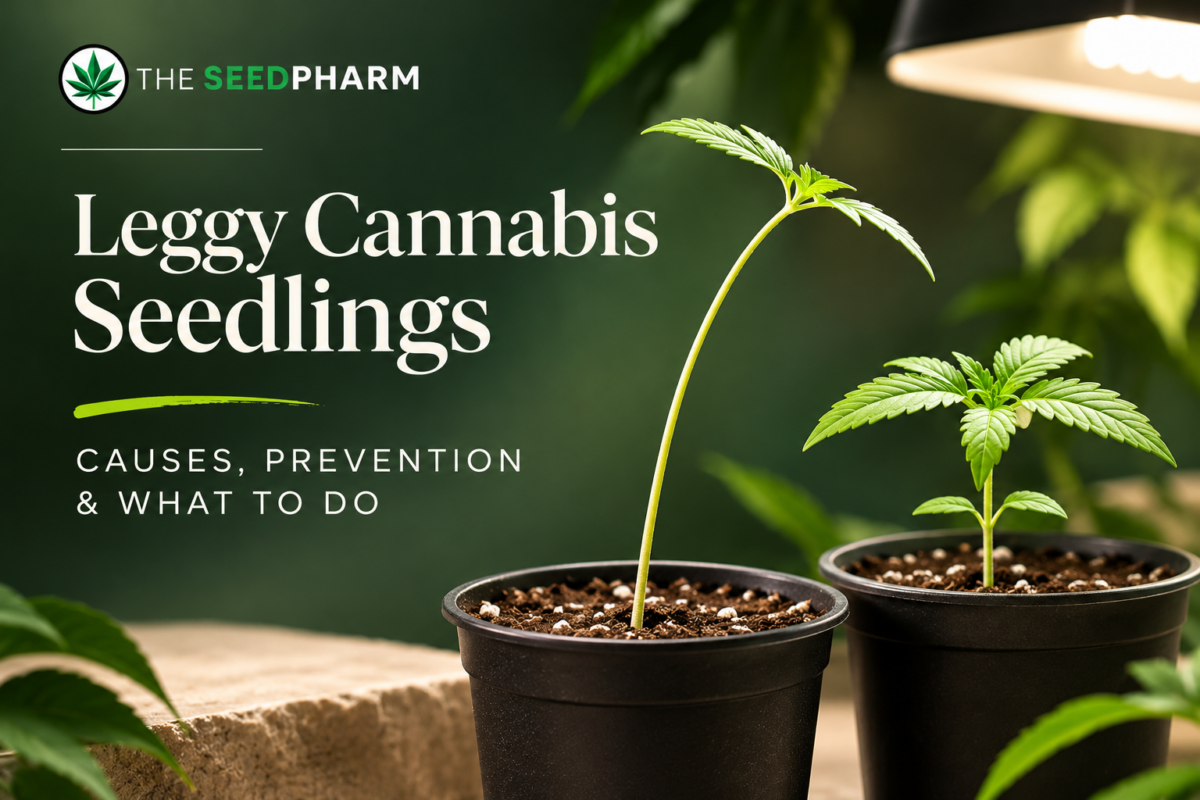
Leggy seedlings are unusually tall, thin, or stretched, often with long stems that struggle to support the plant. Instead of developing compact, sturdy growth, a seedling may lean toward a light source or appear fragile.
This condition is commonly called etiolation. It can occur when a young plant receives insufficient light, but other environmental factors may contribute.
A leggy seedling is not necessarily beyond recovery. The first step is to identify what may be causing the stretching and review the growing environment rather than making several changes at once.
Why Do Cannabis Seedlings Become Leggy?
1. Insufficient Light
Inadequate light is a common cause of stretched seedlings. When light intensity is too low, a plant may elongate as it grows toward a brighter area.
A bright windowsill may not provide consistent light throughout the day, particularly when sunlight is obstructed or seasonal daylight is limited. Artificial lighting can also be insufficient if it is too weak, poorly positioned, or not operated consistently.
What to review: Check whether the seedling receives adequate light for its stage of growth. Follow the lighting manufacturer’s guidance, and adjust gradually while watching for signs of excess heat or light stress.
2. Light Positioned Too Far Away
Even when a grow light is switched on, seedlings may stretch if the light reaching them is insufficient. Distance, fixture output, and the size of the growing area all influence how much light reaches the plant.
Avoid relying on a universal distance recommendation. Different fixtures have different outputs, and the manufacturer’s instructions are the best starting point.
What to review: Confirm the fixture is suitable for seedlings and positioned according to its guidance. Observe how the plant responds after any adjustment.
3. Excessive Warmth
Warm conditions can contribute to rapid, elongated growth, especially when light is inadequate. A seedling may develop a thin stem rather than sturdy growth if temperature and light are poorly balanced.
What to review: Keep the growing environment within an appropriate range for the plant and avoid placing seedlings near heaters or other sources of excessive heat.
4. Crowding
When seedlings grow too close together, they can compete for light and space. This may encourage uneven growth, with some seedlings stretching or leaning.
What to review: Give seedlings enough room to receive light evenly. If several seedlings share a container, follow suitable guidance for separating or thinning them without damaging their roots.
5. Watering and Root-Zone Problems
Watering is not usually the first explanation for stretching, but overly wet growing media can weaken young plants and interfere with healthy root development. Poor drainage can also create conditions that encourage seedling diseases.
What to review: Keep the growing medium appropriately moist rather than saturated. Make sure containers drain properly and avoid watering on a fixed schedule without checking the medium.
How to Respond to Leggy Seedlings
If seedlings are already stretched, focus on improving the conditions that support steady growth:
- Review the light source. Check its suitability, operating schedule, and placement using the manufacturer’s guidance.
- Check temperature. Look for nearby heat sources or unusually warm conditions.
- Assess moisture and drainage. Avoid waterlogged growing media.
- Reduce crowding. Make sure seedlings have adequate space and access to light.
- Observe before making further changes. Record what you adjust and monitor new growth for signs of improvement.
A stretched stem may not return to its original shape. The goal is to support healthier growth from that point forward and prevent additional stretching.
How to Prevent Leggy Seedlings
Prevention starts with a stable environment and regular observation.
- Provide suitable light as soon as seedlings emerge.
- Use a consistent lighting schedule appropriate for the plant and setup.
- Avoid excessive heat and large environmental fluctuations.
- Use clean containers and a well-draining growing medium.
- Keep moisture balanced rather than constantly wet.
- Give seedlings enough space to develop.
- Record observations so you can identify patterns if a problem returns.
A simple grow journal can help track dates, environmental observations, watering, and changes you make. See our guide to keeping a cannabis grow journal for ideas on organizing those notes. Replace this link with the exact published article URL before posting.
Leggy Seedlings vs. Other Seedling Problems
Stretching is not the only reason a young plant may look weak. Before changing the environment, consider whether the symptoms point to another issue.
| Observation | Possible factor to investigate |
|---|---|
| Long, thin stem leaning toward light | Insufficient or uneven light |
| Weak growth with persistently wet medium | Drainage or watering issue |
| Stem narrowing or collapsing at the medium surface | Possible damping-off disease |
| Pale or discolored leaves | Several possible causes; assess the full environment |
These are clues, not definitive diagnoses. If symptoms are severe or continue despite correcting basic conditions, consult a reliable horticultural source or qualified local expert.
Frequently Asked Questions
Can leggy seedlings recover?
They may continue growing, but a stretched stem may remain elongated. Improving the environment can help support healthier new growth.
Does a sunny window prevent stretching?
Not always. Light intensity and duration vary with the window, season, weather, and surrounding obstructions. Observe the seedlings rather than assuming a window provides enough light.
Should I move a grow light closer?
Only if the fixture’s guidance and the conditions indicate that it is appropriate. Different lights produce different levels of intensity and heat, so avoid using one distance for every setup.
Is stretching always caused by light?
No. Insufficient light is a common cause, but temperature, crowding, and other environmental conditions can also contribute.
Final Thoughts
Leggy cannabis seedlings are often a sign that the growing environment needs attention. Light is an important place to start, but temperature, spacing, and moisture also deserve a careful review.
Make measured adjustments, observe the response, and keep notes. A steady, evidence-based approach is more useful than trying several fixes at once.
In stock now
Six Atlas Seed strains, in stock and shipping now. Every pack is covered by our 90% germination guarantee.


Ready to Grow?
Shop premium Beginner-Friendly Seeds with germination guarantee and free shipping.
Shop Beginner-Friendly Seeds →