Oct
Growing Tips
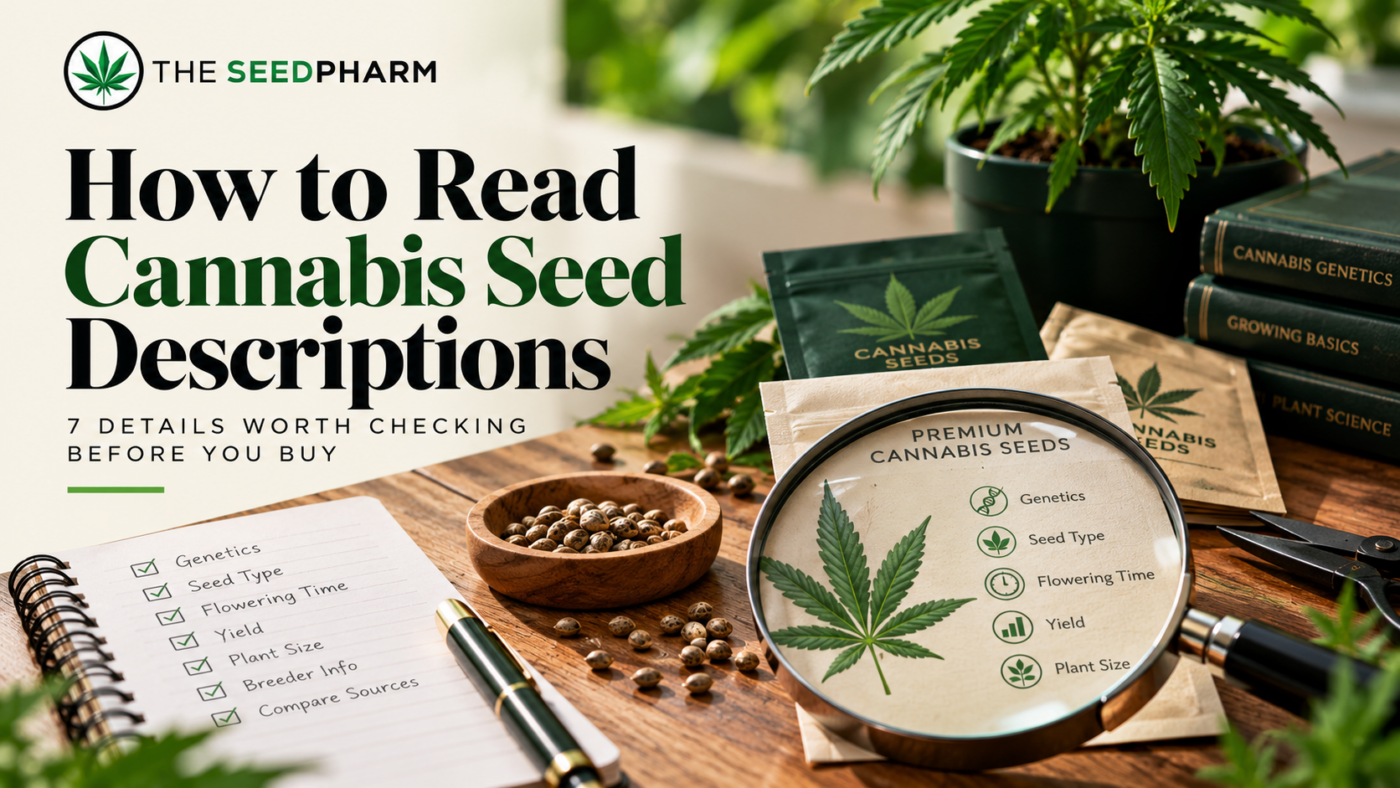
How to Read Cannabis Seed Descriptions: 7 Details Worth Checking Before You Buy
Choosing cannabis seeds online can be confusing, especially when different product pages use similar language to describe their genetics, characteristics, and potential performance. One listing might highlight a particular genetic background, while another focuses on flowering time, plant size, or expected yield.
The challenge is knowing which details genuinely help you make a decision and which claims need further investigation.
A well-written product description should help you understand what is being offered without creating unrealistic expectations. By learning how to evaluate the information on a listing, you can compare options more confidently and avoid basing your choice on marketing language alone.
Here are seven details worth checking when researching cannabis seeds online.
1. Check the Genetic Background
Genetic information provides context about a variety’s origin and reported characteristics. Product descriptions may identify parent varieties, breeding lines, or the breeder responsible for developing the genetics.
This information can help you distinguish between products with similar names or descriptions. However, genetic names alone do not tell you everything about a particular seed line.
For example, two products associated with the same well-known variety may come from different breeders or breeding projects. Their descriptions, selection processes, and reported characteristics may therefore differ.
When reviewing genetic information, look for a clear explanation of the variety’s background. Check whether the breeder is identified and whether the information is consistent across reliable sources.
For a practical example, compare the genetic information and product details provided on a listing such as Blueberry feminized seeds with those of other varieties.
Be cautious when a listing makes detailed claims about genetics but provides no supporting context. A recognisable name can be useful, but it should not replace a closer look at the actual product information.
2. Understand the Seed Category
Seed categories describe important characteristics, and understanding their terminology makes comparisons easier.
Feminized seeds are bred to produce female plants at a high rate, although biological outcomes should not be treated as absolutely guaranteed.
Autoflowering seeds are associated with flowering triggered primarily by plant age rather than the seasonal light-cycle changes required by traditional photoperiod varieties.
Regular seeds can produce male or female plants, which is an important consideration when evaluating a product.
These categories describe different aspects of the seeds. They are not always mutually exclusive: an autoflowering variety can also be feminized.
When comparing listings, confirm the stated category rather than relying on a product title alone. If the description uses terms inconsistently, check the breeder’s documentation or contact the seller for clarification.
You can also review the specifications for White Widow autoflower seeds to see how an autoflowering product is described.
Understanding the terminology first makes it easier to compare products based on their actual characteristics instead of their promotional descriptions.
3. Treat Flowering Times as Estimates
Flowering time is one of the most noticeable details on many cannabis seed listings. It can be useful when evaluating a variety, but it is important to understand what the figure represents.
A flowering estimate is not necessarily the same as the complete period from germination to harvest. Some descriptions refer only to the flowering stage, while others provide an estimated overall lifecycle.
The distinction matters when comparing two products. A variety advertised with a shorter flowering period is not automatically faster across every stage of development.
Environmental conditions, genetics, and cultivation methods can also affect development. Outdoor growing introduces additional variables, including seasonal weather and local climate.
Before comparing timelines, check how the estimate is defined and whether the breeder provides supporting details. If the timeframe is unclear, avoid assuming that two figures use the same measurement.
When comparing products, review the flowering-time information provided for Durban Poison Autoflower Seeds alongside the available breeder documentation.
The most useful listing is one that explains its specifications clearly rather than relying on an attractive number without context.
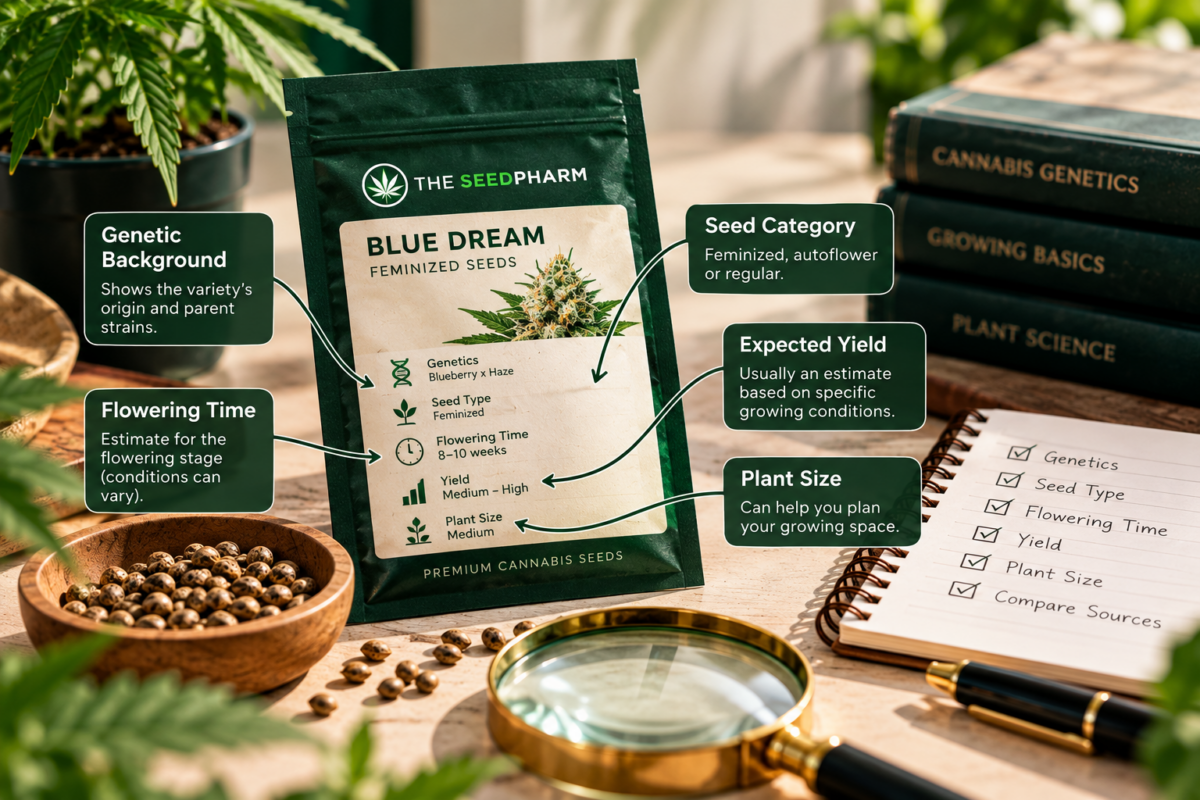
4. Look Beyond Advertised Yield Figures
Yield claims can attract attention, but they are among the easiest specifications to misinterpret.
A listing may report an expected yield per plant or per square metre. These measurements are not directly interchangeable, and neither should be treated as a guaranteed result.
Actual output can vary depending on genetics, environmental conditions, available space, plant health, and cultivation practices. Indoor and outdoor estimates may also reflect very different conditions.
Consider a hypothetical example: one product advertises a yield per square metre, while another reports yield per plant. Comparing the two numbers directly would not provide a meaningful conclusion because the measurement bases differ.
Instead, look for the unit of measurement, the growing environment, and any explanation of the conditions behind the estimate.
A credible product description should make its figures understandable. If the basis for a claim is missing, treat it as an estimate that requires further verification rather than a promise of future performance.
5. Check Whether Product Details Are Specific
Useful product descriptions answer practical questions. They should identify the seed category, provide relevant genetic information, and explain the characteristics being reported.
Vague phrases such as “premium genetics,” “excellent performance,” or “outstanding quality” do not offer much information on their own. They may communicate a seller’s positioning, but they are not substitutes for specific product details.
When reviewing a listing, ask yourself:
- Is the breeder or genetic source identified?
- Is the seed category clearly stated?
- Are flowering-time estimates explained?
- Are yield figures accompanied by appropriate units?
- Are the reported characteristics consistent with available breeder information?
- Is there enough information to distinguish this product from similar options?
Not every listing will answer every question, and missing information does not automatically mean a product is poor quality. It does, however, give you a reason to investigate further before making a decision.
Clear documentation is more useful than a long description filled with impressive but unsubstantiated adjectives.
6. Compare Sources, Not Just Store Listings
When a product catches your attention, take a moment to compare its description with other credible sources.
Start with the breeder’s official documentation when it is available. Then look for reputable references that discuss the same variety and its reported characteristics.
Pay attention to differences in terminology, measurements, and estimates. If one source describes a flowering period while another gives a complete lifecycle estimate, the figures may not actually conflict.
Likewise, two sources might report different yields because they refer to different environments or growing conditions.
Do not assume that the most detailed description is automatically the most accurate. Check where the information comes from and whether the claims can be traced to a credible source.
Independent verification is particularly useful when a listing includes precise performance figures, unusual genetic claims, or specifications that differ from the breeder’s published information.
If important discrepancies remain unresolved, contact the seller before proceeding.
7. Consider the Seller’s Transparency
Product information is only one part of the purchasing decision. The seller’s transparency also matters.
Look for clear product specifications, accessible customer support, understandable shipping information, and policies that explain what happens if an order arrives damaged or an issue arises.
Where a germination or delivery guarantee is advertised, read its terms carefully. Check eligibility requirements, claim deadlines, required evidence, and any applicable exclusions.
Avoid assuming that a guarantee covers every possible situation simply because it appears prominently on a website.
It is also sensible to review payment security, privacy information, and relevant purchasing restrictions. Cannabis-related laws differ between jurisdictions, so confirm the rules that apply to your location before ordering or attempting germination.
A transparent seller makes important information easy to find and explains its policies without relying on ambiguous promises.
A Simple Checklist for Comparing Seed Listings
Before making a decision, use this quick checklist:
| What to check | Why it matters |
|---|---|
| Genetic background | Helps identify the variety and its source |
| Seed category | Clarifies the characteristics being described |
| Flowering estimate | Makes timeline comparisons more meaningful |
| Yield measurement | Prevents misleading comparisons between different units |
| Supporting documentation | Helps distinguish reported facts from promotional claims |
| Seller policies | Clarifies guarantees, delivery terms, and support |
| Local regulations | Helps you understand applicable legal restrictions |
You can also keep a short comparison note for each product you research. Recording the breeder, category, key specifications, and unresolved questions makes it easier to revisit your options without relying on memory.
Final Thoughts
A cannabis seed listing should provide useful information, not simply persuade you to purchase a product. Genetic background, seed category, flowering estimates, yield measurements, and supporting documentation all help you understand what is being offered.
The key is to read each specification in context. An estimate is not a guarantee, a familiar name does not establish identical genetics, and promotional language does not replace verifiable information.
At The Seed Pharm, we believe that informed choices start with understanding the details. Take time to compare product descriptions, consult reliable sources, and ask questions whenever important information is unclear.
The Seed Pharm — Your Grow. Our Seeds.
Always check the laws applicable to your location before purchasing or germinating cannabis seeds.
Frequently Asked Questions
What should I look for in a cannabis seed description?
Start with the genetic background, seed category, flowering-time estimates, and any available breeder documentation. Check whether the claims are clearly explained and supported by identifiable sources.
Are advertised cannabis yields guaranteed?
No. Yield figures are estimates or reported results, and actual outcomes depend on genetics, environmental conditions, cultivation practices, and the measurement method used.
Why do different websites give different flowering times?
Sources may use different definitions, growing environments, or measurement periods. Check whether a figure refers to flowering alone or the complete lifecycle before comparing estimates.
How can I verify cannabis seed information?
Begin with the breeder’s official documentation and compare relevant specifications with reputable sources. Contact the seller if important details are missing or inconsistent.
In stock now
Six Atlas Seed strains, in stock and shipping now. Every pack is covered by our 90% germination guarantee.




Ready to Grow?
Shop premium Beginner-Friendly Seeds with germination guarantee and free shipping.
Shop Beginner-Friendly Seeds →