Nov
Beginner's Guide to Growing Marijuana
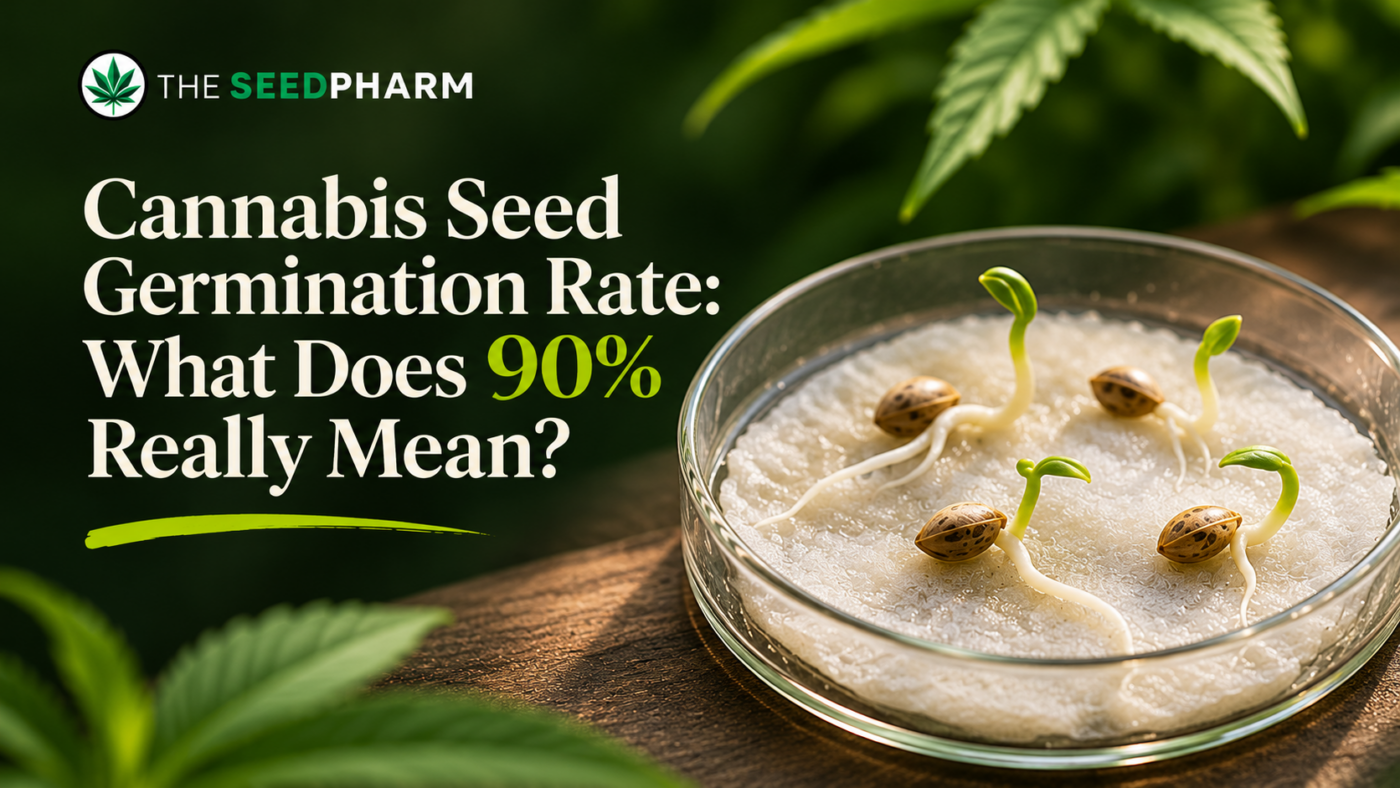
Cannabis Seed Germination Rate: What Does 90% Really Mean?
What Is a Seed Germination Rate?
When comparing seed suppliers, you may come across claims such as 80%, 90%, or even 95% germination. These figures can look straightforward, but what do they actually tell you?
A germination rate is the percentage of seeds in a tested sample that successfully germinate under the conditions of that test.
For example, if 90 out of 100 seeds germinate, the sample has a germination rate of 90%.
However, this does not mean that every pack will produce exactly the same result. Individual seeds can differ, and the conditions surrounding germination also matter.
Understanding the number behind the claim can help you compare suppliers more carefully and make better-informed purchasing decisions.
How Is Germination Percentage Calculated?
The calculation is simple:
Germination Rate (%) = (Number of Germinated Seeds ÷ Total Seeds Tested) × 100
Here are a few examples:
| Seeds tested | Seeds germinated | Germination rate |
|---|---|---|
| 10 | 9 | 90% |
| 20 | 18 | 90% |
| 50 | 45 | 90% |
| 100 | 90 | 90% |
Although each example produces the same percentage, the sample sizes are different.
This distinction matters. A result from a small sample provides less information about a larger batch than a result based on a larger, representative sample.
When a seller advertises a germination percentage, it is reasonable to ask how the result was measured and how many seeds were included in the test.
What Does a 90% Germination Rate Actually Mean?
A 90% germination rate means that 90% of the seeds in the tested sample germinated under the stated testing conditions.
It does not mean:
- Every individual seed is guaranteed to germinate.
- Every pack will produce identical results.
- Seeds will germinate regardless of their condition or environment.
- A particular percentage of seedlings will reach maturity.
- The same result applies to every variety or batch without supporting evidence.
Think of germination percentage as a measurement of a sample, not a prediction that removes every possible variable.
A useful germination claim should be supported by clear information about the testing method, sample size, and conditions.
What Factors Can Affect Germination Results?
Germination depends on both seed condition and the environment in which the test takes place.
1. Seed Age and Storage History
Seeds are biological material. Their ability to germinate can decline over time, and the rate of decline depends partly on how they have been stored.
Exposure to excessive moisture, heat, and unsuitable storage conditions can affect seed quality.
For more information, read our guide: How to Store Marijuana Seeds Long-Term.
2. Moisture
Water is involved in the process of germination, but excessive moisture can create problems. A testing medium that becomes waterlogged may limit oxygen availability and encourage mould or other unwanted growth.
Testing conditions should therefore be controlled and documented rather than based on guesswork.
3. Temperature
Temperature influences the speed and success of germination. Different plant species have different requirements, so a test should use conditions appropriate to the seed being evaluated.
A result without information about temperature is harder to interpret or compare with another test.
4. Testing Method
Different methods can produce different observations. The medium, moisture level, temperature, duration, and definition of successful germination should be considered when reviewing a result.
For this reason, two suppliers may report different percentages even when their testing methods are not directly comparable.
Why Sample Size Matters
Imagine two suppliers reporting a 90% germination rate.
Supplier A tests 10 seeds, and 9 germinate.
Supplier B tests 100 seeds, and 90 germinate.
Both results equal 90%, but the second test includes a much larger sample.
A larger, representative sample generally provides more useful information about a seed lot. It does not eliminate uncertainty, but it makes the reported result more informative.
This is why buyers should look beyond the percentage itself and consider the evidence behind it.
What Should You Check Before Buying Seeds Online?
A germination claim is only one part of evaluating a seed supplier. Before placing an order, review the following details.
1. Is the germination claim clearly explained?
Look for information about what the percentage represents and whether it is based on actual testing or a general company claim.
2. Is there a written germination policy?
A guarantee should explain what is covered, how to report a problem, and whether there are time limits or evidence requirements.
3. Is the product information clear?
Review the variety name, seed category, available genetic information, and product specifications.
4. Can you contact the seller?
A reliable supplier should provide a way to ask questions about products, orders, and policies.
5. Are the shipping and legal requirements clear?
Check delivery conditions and the laws that apply to your location before ordering or germinating seeds.
Understanding The Seed Pharm’s 90% Germination Guarantee
The Seed Pharm currently advertises a 90% germination guarantee on its website.
Its published homepage information states that customers who experience germination below the advertised threshold can contact the company within 30 days of delivery, with their order information and photographs, to request replacement seeds.
Before relying on a guarantee, always review the current terms and follow the stated reporting process. Keep your order confirmation and any relevant documentation.
The purpose of a guarantee is to make the seller’s commitment clearer. It should not be interpreted as a promise that every seed will germinate under every possible condition.
You can explore available varieties in The Seed Pharm catalogue.
Frequently Asked Questions
Is a 90% germination rate good?
A 90% result indicates that 90% of the tested sample germinated under the stated conditions. Whether it is a strong result depends on the testing method, sample size, and relevant seed standards.
Does a 90% germination rate mean every pack will have 90% success?
No. A reported percentage describes a tested sample. Individual packs and growing conditions can produce different results.
What is the difference between seed viability and germination?
Viability refers to whether a seed is alive and capable of developing. Germination is the process in which the seed begins to grow. A viable seed may not germinate if conditions are unsuitable.
Can old seeds still germinate?
Some older seeds may remain viable, but their condition depends on factors such as age, original quality, and storage history. Age alone cannot confirm whether a seed will germinate.
What should I do if seeds do not germinate?
First, document the issue and review the seller’s published policy. If you purchased from The Seed Pharm, contact its support team within the stated reporting period and follow the current guarantee requirements.
A germination percentage is useful, but the number alone does not tell the complete story.
When comparing seed suppliers, look at the sample size, testing conditions, product information, and written guarantee. A transparent explanation is more valuable than an impressive percentage without supporting details.
At The Seed Pharm, we believe informed decisions start with clear information and realistic expectations.
In stock now
Six Atlas Seed strains, in stock and shipping now. Every pack is covered by our 90% germination guarantee.