Oct
How To Grow Marijuana Seeds
Autoflower Outdoor Growing: Start Only When Nights Stay Above 10°C
Yes, autoflowers are a pragmatic outdoor choice when you need a predictable, fast finish instead of fighting a long season or a wet autumn. The single most important practice is timing: start only once soil and nightly temperatures are reliably warm, because early cold stress is the main reason outdoor autoflower crops fail or stall.
TL;DR:
- Starting after soil temperatures reliably exceed 10°C is crucial, as cold roots can permanently stall autoflower growth outdoors.
- Placing plants in spots with strong morning sun, good airflow, and well-draining soil helps prevent moisture-related fungal problems and root rot risks.
- Autoflower strains vary significantly in outdoor performance; choose based on early vigor, mould resistance, and structure rather than yield claims alone.
- Final plant size and harvest timing depend heavily on pot size, site conditions, and early training, not just the genetic strain.
- Proper timing and site selection determine success more than strain choice, with outdoor autos typically finishing in 65 to 75 days.
Table of Contents
- When to plant: timing rules by latitude, frost risk, and season length
- Site selection and microclimate controls: sun, wind, drainage, and airflow
- Choosing strains: what traits matter most outdoors
- Planting and early care: germination, pot size, and transplant timing
- Soil, feeding, and watering plan tailored for outdoor autos
- Pest and disease prevention and quick response outdoors
- Expectations: size, yield, and harvest timing for outdoor autoflowers
- Publisher proof points: what backs our seed reliability
- A note on trade-offs and what actually decides your outcome
- Purchase guide: featured autoflower seeds and how to buy
- FAQ
- Sources
When to plant: timing rules by latitude, frost risk, and season length
Autoflowers move through their life cycle by age, not by the shift in day length that triggers flowering in photoperiod plants. That single difference changes everything about when you sow. A photoperiod plant waits for shorter days before it flowers, so you can delay planting and still catch a full bloom window later. An autoflower does not wait. It flowers on a fixed internal clock, usually a set number of weeks from germination, which means a rough start or a cold snap in week two can push a plant into flowering while it is still small and underdeveloped.
In most temperate regions, waiting until night temperatures hold reliably above 10°C before sowing pays off far more than chasing an early start. In shorter-season climates, growers often stagger two or three sowings two to three weeks apart rather than betting everything on one date. Autoflowering genetics finish earlier than photoperiod plants, which is exactly why they work well where the goal is beating the first autumn rains rather than maximizing a single plant’s size.
A few practical rules carry most of the weight:
- Treat soil temperature, not the calendar, as your starting signal; cold roots stall growth permanently in autos.
- Stagger sowing dates to spread harvest risk and avoid losing an entire crop to one bad week.
- Favour a slightly later start over an early one, since autos rarely recover the lost time from a rough first two weeks.
Site selection and microclimate controls: sun, wind, drainage, and airflow
Where you place an autoflower often matters more than how you feed it. Morning sun that dries dew off the leaves quickly reduces the humid window that fungal problems need to establish, so a spot with strong early light and only partial afternoon shade usually outperforms one with the reverse pattern. Evening shade that traps moisture overnight is one of the more overlooked setup mistakes outdoor growers make.
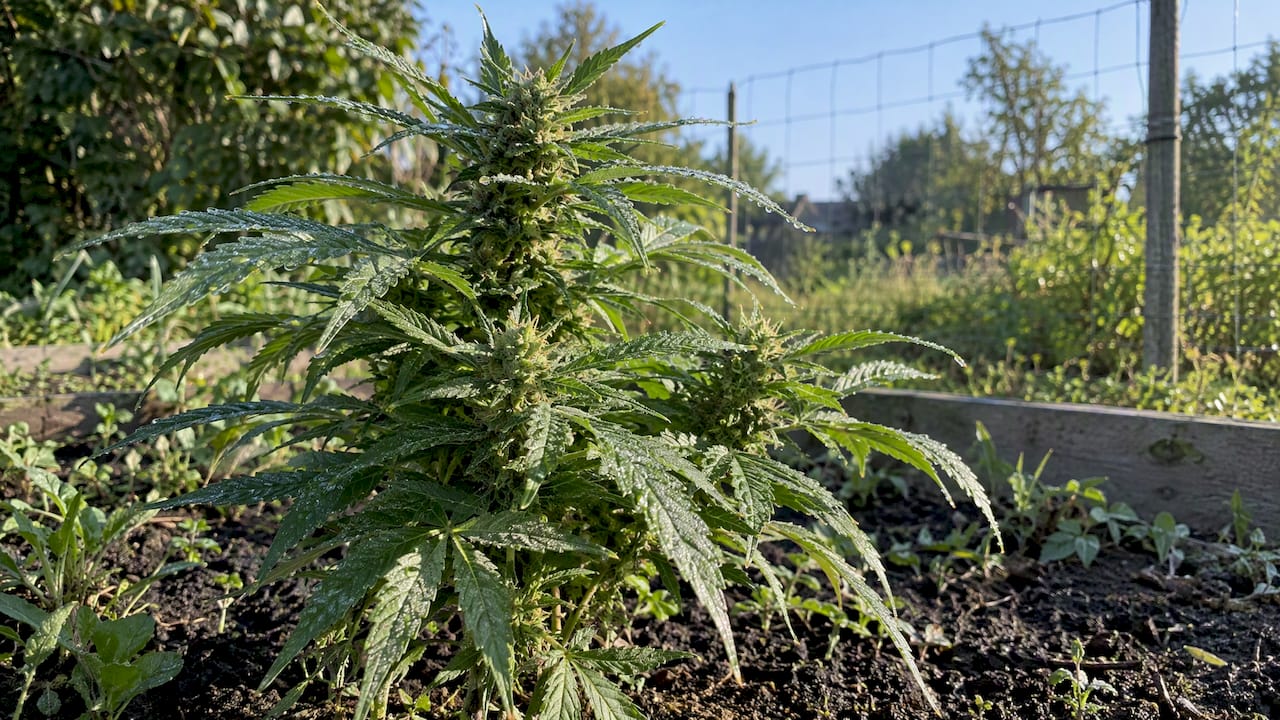
Wind protection and airflow sound contradictory but work together. You want a windbreak, a fence line, shrubs, or a garden wall, to prevent stem damage and moisture stress, while still keeping air moving through the canopy itself. Light staking and selective pruning of lower, crowded growth let air pass through the plant rather than around it, which keeps humidity from pooling near the buds.
Drainage decides whether a heavy rain event is a non-event or a root-rot emergency. Raised beds work well on clay-heavy ground, in-ground growers can dig in coarse amendments like perlite or pumice to break up dense soil, and container growers get the most control simply by choosing pots with generous drainage holes and elevating them off waterlogged ground.
- Choose planting spots with strong morning sun and quick-drying foliage over shadier, damp corners.
- Use windbreaks for stem protection, paired with light pruning to keep airflow moving through the canopy.
- Improve drainage with raised beds, soil amendments, or elevated containers depending on your site.
Pro Tip: Walk your planting site at dawn before committing; the spot that clears dew first is almost always the better choice.
Choosing strains: what traits matter most outdoors
Yield numbers on a seed page look appealing, but outdoor success depends more on early vigour, a sturdy branching structure, and resistance to mould than on a headline number. A plant that grows quickly in its first two weeks, holds its structure in wind, and sheds moisture well through its flower clusters will usually outperform a higher-yield genotype that struggles with your specific climate. Field-based research on outdoor cannabis cultivation confirms that no single cultivar performs best across every environment, since yield outcomes depend heavily on the interaction between genetics and local conditions.
When comparing breeder notes, look past the yield claim and read for mentions of outdoor-specific performance: mould resistance, branching habit, and how the strain handled real field trials rather than controlled indoor runs. That same research cautions against trusting single-site claims when your climate differs significantly from where a strain was tested, so multi-site evidence or consistent grower feedback carries more weight than a single glowing description.
Among the strains we carry, each suits a different outdoor priority:
- Honey OG autoflower seeds suit growers who want a fast, predictable finish without fussing over a long bloom window.
- AK autoflower seeds work well on compact sites or in containers, given their manageable structure.
- Pineapple Express autoflower seeds offer a balance of yield and flavour for growers with a reasonably sheltered, sunny plot.
Planting and early care: germination, pot size, and transplant timing
The first two weeks decide more of an autoflower’s final size than any later intervention, since there is no vegetative reset once flowering starts on schedule. Getting germination and early root development right matters more here than with photoperiod plants, where a slow start can still be corrected later.
- Germinate seeds using a moist paper towel or direct-to-soil method, keeping conditions warm and consistent rather than fluctuating.
- Choose quality seed stock from the outset; our germination guarantee reflects a batch inspection process meant to reduce the odds of a dead start before you have invested weeks of care.
- Size your containers generously from the start, since autos dislike transplant shock and larger pots buffer root-zone temperature swings that stall growth in hot weather.
- Use light-coloured pots and a surface layer of mulch to reduce heat absorption, since container root temperatures can spike rapidly in dark plastic sitting in direct sun.
- If you do need to transplant, do it early and gently, disturbing roots as little as possible, since autos have a fixed window to recover and no time to spare.
Pro Tip: Skip small starter pots entirely if you can; going straight into a final-size container from germination avoids a transplant shock most autos never fully shake off.
For more on diagnosing undersized plants, our guide on avoiding small auto cannabis plants covers common recovery mistakes.
Soil, feeding, and watering plan tailored for outdoor autos
Outdoor autoflowers do best in a well-draining mix with real organic matter, built to hold moisture without staying waterlogged. A pH target of roughly 6.0 to 7.0 keeps nutrients available without locking out key minerals, and that range holds whether you are growing in containers or straight in the ground. Our soil guide for autoflowering seeds walks through specific amendment choices if you are building a mix from scratch.
Watering frequency depends more on your container and local evapotranspiration than on a fixed schedule. Check soil moisture an inch or two below the surface rather than watering by the calendar, and expect containers to dry out considerably faster than in-ground beds during hot stretches.
Feeding autos calls for a lighter touch than feeding photoperiod plants, mostly because their compressed timeline leaves little room to correct an overfeeding mistake.
- Keep nitrogen modest during the first few weeks; autos do not need a long, heavy vegetative push.
- Shift toward bloom-formulated nutrients earlier than you would with a photoperiod plant, since flowering starts on a fixed schedule rather than a light cue.
- Watch for nutrient burn on leaf tips as your first sign to back off rather than add more.
Soil pH near 6.0 to 7.0 with balanced organic matter supports healthy aeration and steady nutrient uptake through an outdoor auto’s shortened cycle.
Pest and disease prevention and quick response outdoors
Most outdoor disease problems trace back to moisture sitting where it shouldn’t: on leaves overnight, inside a dense canopy, or around flower clusters during a humid stretch. Cultural controls do more preventive work than any spray. Prune lower growth to open airflow, space plants so canopies don’t touch, and water at the base in the morning rather than in the evening, since evening watering leaves foliage wet overnight when fungal growth thrives.
A short scouting routine catches problems early. Check the undersides of leaves weekly for the fine webbing or stippling that signals spider mites, look for a powdery white coating that signals mildew, and inspect dense flower clusters for the grey, fuzzy patches that mark botrytis. Bud rot prevention guidance stresses that dense, humid flower structures are the highest-risk spots, and that frequent inspection combined with fast removal of any symptomatic bud is the most reliable way to stop it from spreading.
- Prune and space plants early to keep air moving through the canopy before problems start.
- Water at the base in the morning, never in the evening, to avoid leaving foliage wet overnight.
- Remove any mouldy or infected flower material immediately rather than waiting to see if it spreads.
Before reaching for any pesticide or fungicide, check your local cultivation laws, since rules on permitted treatments and outdoor growing itself vary by jurisdiction.
Expectations: size, yield, and harvest timing for outdoor autoflowers
Outdoor autoflowers typically finish smaller than photoperiod plants, with final size driven heavily by pot size, site quality, and how early you started training. Breeders commonly cite a 65 to 75 day cycle from sowing to harvest, though real-world timing and yield shift considerably with your specific climate and site conditions, so treat any single number as a starting estimate rather than a guarantee.
Judging ripeness comes down to watching trichomes and pistils rather than counting days on a calendar. Cloudy trichomes with a portion turning amber generally signal peak ripeness, while pistils that have mostly darkened and curled inward back up that read. Finishing before a persistent autumn wet spell sets in matters more outdoors than squeezing out a few extra days of ripening, since late-season humidity is exactly when bud rot risk climbs fastest.
- Expect final size and yield to vary widely based on pot size, site conditions, and training, not genetics alone.
- Use trichome colour and pistil appearance together rather than relying on either sign alone.
- Harvest before a wet autumn stretch arrives rather than waiting for a marginal gain in ripeness.
Once harvested, proper drying and curing protect the quality you worked all season to produce; our drying and curing guide covers the full process.
Publisher proof points: what backs our seed reliability
We carry over 200 strains across feminized, autoflowering, regular, and CBD genetics, and every batch goes through an inspection process tied to our 90% germination guarantee. That matters most to outdoor growers precisely because autos give you one shot: a weak seed costs you a sowing window you may not get back.
Shipping is discreet and tracked to address common concerns about privacy for growers. Orders above a certain amount include free seeds, providing a low-cost way to trial a second strain alongside a primary pick.
Beyond the seed itself, our strain-specific grow guides, including our White Widow autoflower grow guide, document real growing notes that reduce the guesswork involved in matching a genotype to your climate.
A note on trade-offs and what actually decides your outcome
Autoflowers trade size for speed, and that trade-off is the whole game. You are not going to out-yield a photoperiod plant grown in a long, warm season, and anyone promising otherwise is overselling the genetics. What autos buy you is a finish date you can plan around and a shorter exposure window to bad weather.
Climate and timing decide more of your outcome than the strain label ever will. Treat every season as a small experiment: note what worked, adjust your sowing date next year, and lean on strain-specific resources rather than generic advice once you’ve got a season or two under your belt.
— The.
Purchase guide: featured autoflower seeds and how to buy
Picking the right strain for your site matters as much as picking the right sowing date. Honey OG autoflower seeds suit growers prioritizing a fast, low-fuss finish. AK autoflower seeds fit tighter, compact plots or container setups. Pineapple Express autoflower seeds reward growers with a sheltered, sunny spot who want a flavour-forward harvest without sacrificing yield.
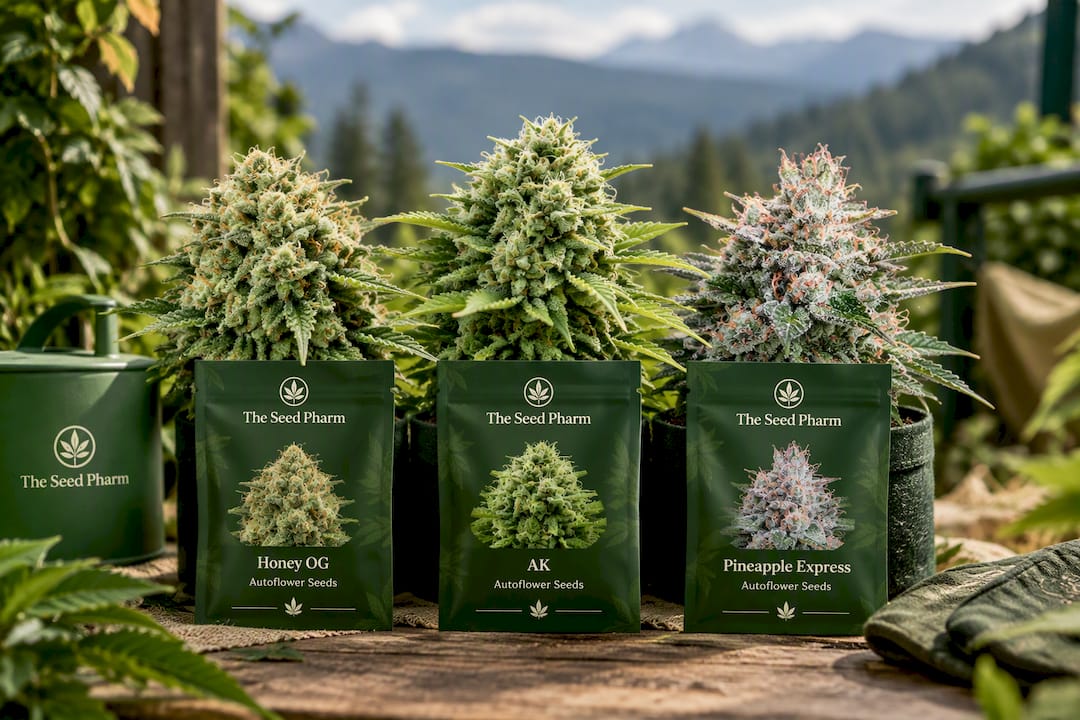
Before you order, check that your chosen strain’s notes match your climate, confirm our germination guarantee covers your order, and opt for discreet tracked shipping if privacy matters to you. Browse our full autoflower, feminized, and CBD seed selection to compare options and place your order.
FAQ
Are autoflowers good to grow outdoors?
Yes, autoflowers work well outdoors when timing and site selection are handled correctly, since their fixed flowering schedule lets them finish before late-season wet weather sets in. They are especially useful in shorter-season climates where photoperiod plants would risk an incomplete bloom.
How big do autoflowers get outdoors?
Outdoor autoflower size varies considerably depending on pot size, site conditions, and how early training began, so there is no single reliable figure. Growers who use larger containers, strong sun exposure, and early low-stress training typically see noticeably larger finished plants than those grown in small pots or shaded spots.
What are the best autoflowering strains for growing outdoors?
Strong outdoor autoflower choices prioritize early vigour, sturdy branching, and mould resistance over headline yield claims, since field research confirms genotype performance shifts heavily with local climate. Options like Honey OG, AK, and Pineapple Express autoflower seeds each suit different outdoor scenarios, from fast finishes to compact sites to balanced flavour and yield.
How much yield can you get from an autoflower grown outside?
Yield from outdoor autoflowers depends heavily on site quality, pot size, and training rather than genetics alone, which makes any single yield figure unreliable as a general expectation. Growers who manage sunlight, drainage, and airflow well tend to see notably better results than those who leave a plant in a shaded, poorly drained spot.
Is it legal to grow autoflower cannabis outdoors?
Rules on home cultivation, including outdoor grows specifically, vary by jurisdiction within the United States, and some areas restrict or prohibit outdoor cultivation even where indoor growing is allowed. Check your local cultivation laws before planting, and consult a resource on related hemp and CBD regulations if your situation involves CBD-specific products.
Sources
- Genetic and environmental determinants of crop yield in outdoor Cannabis sativa L. cultivation: evidence from field-based research – Nexus
- Home Cannabis Cultivation (Washington LCB research brief)
- Heat stress and cannabis outdoor growing tips – Atami (USA)
- Cannabis bud rot (Botrytis) prevention and control – Athena Ag
Recommended
- White Widow Autoflower Seeds: Grow Guide & Review
- Autoflower vs Photoperiod Seeds: Which Should You Grow?
- Star Killer Strain Seeds: Autoflower Grow Guide & Review
- The Ultimate Guide to Autoflower Cannabis Weed
Ready to Grow?
Shop premium Autoflower Seeds with germination guarantee and free shipping.
Shop Autoflower Seeds →