Oct
How To Grow Marijuana Seeds
Growers: Purple Cannabis Strains Without Sacrificing Yield or Potency
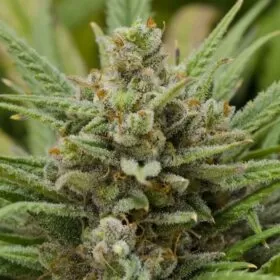
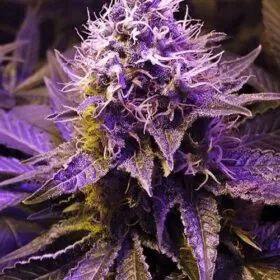
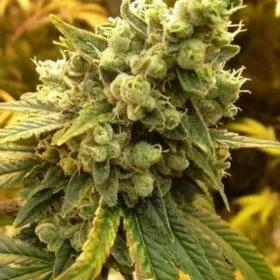
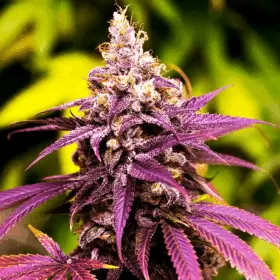
Purple cannabis strains get their colour from anthocyanin pigments, not from any special potency or indica trait. Research into leaf pigmentation in cannabis shows that anthocyanin genes vary widely by cultivar and tissue, which is why colour and strength sit on completely separate axes. Purple plants can be sativa or indica dominant, and this guide walks through how to spot genuine purple expression, which cultivars tend to show it, and how to choose seeds without gambling on colour alone.
TL;DR:
- Genetic variation and phenotype hunting are key to reliably producing purple cannabis, as cultivar names alone do not guarantee colour expression.
- Anthocyanin pigments, especially keracyanin, cause purple hues and are influenced by genetic regulation, tissue type, and environmental factors.
- True purple coloration usually appears gradually during flowering and should be consistent across multiple branches, not just isolated leaves.
- Extreme temperature changes can harm yield and potency, so moderate cooling is recommended to encourage purple colour without damaging the plant.
- Effective seed choices depend on documented phenotype stability, lab reports, and careful breeding history, rather than relying solely on strain names or colour claims.
Table of Contents
- 1. Recognised purple cultivars and what to expect from them
- 2. How anthocyanins turn cannabis plants purple
- 3. How to tell real purple colour from plant stress or damage
- 4. Choosing seeds that are likely to turn purple
- 5. Cultivation tactics that encourage colour without wrecking your harvest
- 6. The Seed Pharm: seed expertise and practical guarantees readers can rely on
- 7. Deciding how much purple colour actually matters to your grow
- 8. The Seed Pharm’s purple seed picks and how to buy
- FAQ
- Sources
1. Recognised purple cultivars and what to expect from them
Cultivar names hint at colour potential, but phenotype runs within the same genetics can vary. Breeder documentation and clear lineage matter more than a catchy name. The cultivars below are commonly associated with purple expression, though individual plants from the same seed batch can still finish green.
- Granddaddy Purple lineage: Purple Urkle crossed with Big Bud, known for dense, grape-toned flowers and a relaxed, sedating profile.
- Purple Haze background: a sativa-leaning cultivar whose haze genetics show that purple colour and sativa classification aren’t mutually exclusive, with an earthy, berry-tinged aroma.
- Purple Punch: Granddaddy Purple crossed with Larry OG, often showing deep violet calyxes and a grape-candy scent profile, as noted in strain references for Purple Punch.
- Blueberry-descended purples: cultivars tracing back to Blueberry genetics often carry strong anthocyanin expression along with a sweet, fruity terpene signature.
- Purple Urkle: an older California cultivar prized for consistent dark purple hues and a musky, grape-like scent.
- Mendocino Purps: a landrace-influenced cultivar with a reputation for uneven but striking purple patches on fan leaves.
- Purple Kush: an indica cross known for near-uniform lavender to deep purple flowers and a heavy, earthy profile.
- Granddaddy Purple x Blue Dream crosses: hybrid offerings bred specifically to combine colour stability with a more energetic effect.
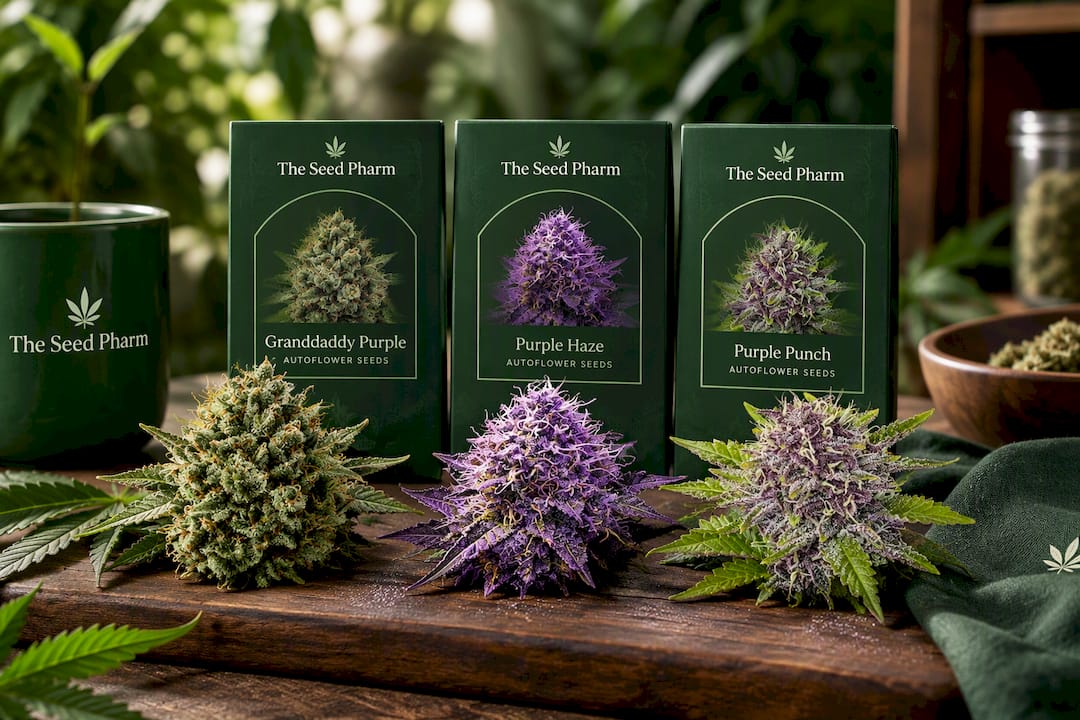
The Seed Pharm lists three cultivars directly relevant to this list. The Granddaddy Purple Strain Autoflower Seeds suit growers who want a compact, colour-prone plant on a fixed timeline. The Purple Haze Strain Autoflower Seeds fit growers chasing a sativa-leaning purple with a shorter cycle than photoperiod Haze crosses. The Purple Punch Strain Autoflower Seeds work well for growers prioritizing aroma and a dessert-like terpene profile alongside colour.
None of these names guarantee a purple harvest. A detailed Granddaddy Purple grow guide is worth reading before you commit to a specific pheno, since phenotype variation within a single cultivar is common and well documented.
2. How anthocyanins turn cannabis plants purple
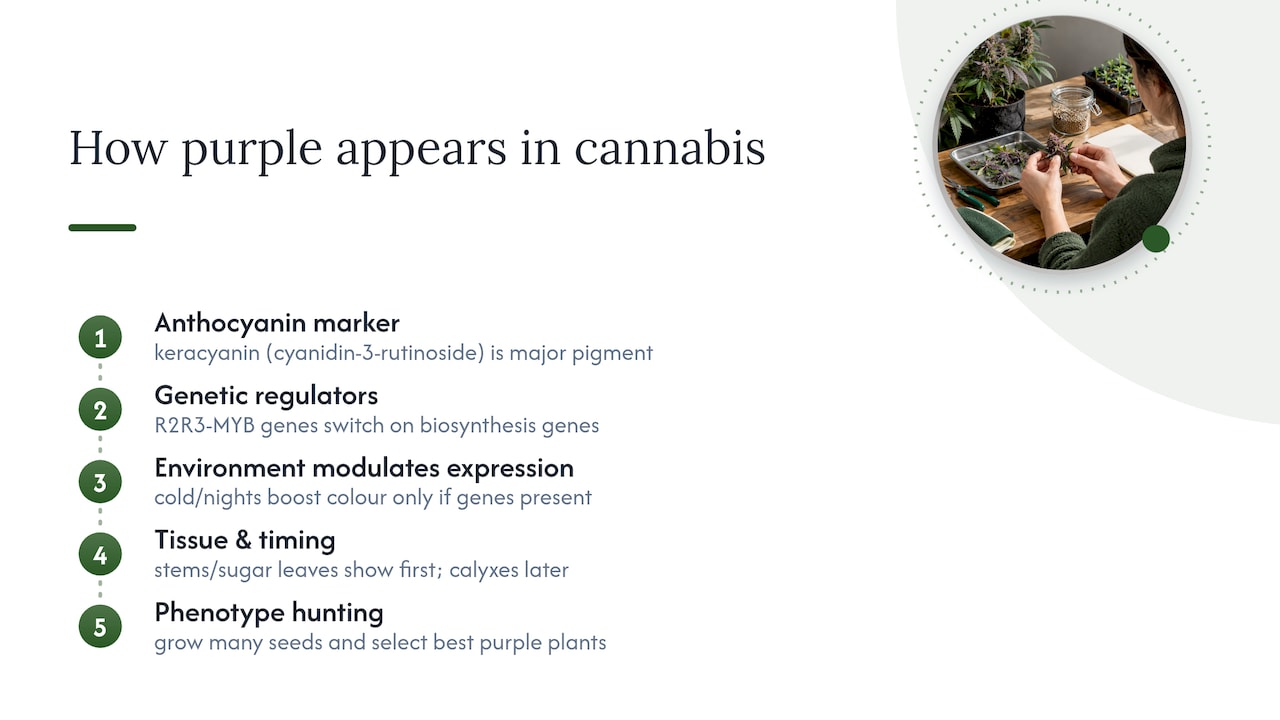
Purple colour comes from anthocyanins, a class of flavonoid pigments that accumulate in leaves, stems and flowers as chlorophyll production slows. A targeted study on purple cannabis tissues identified cyanidin-3-rutinoside, also called keracyanin, as a major anthocyanin found across purple leaf, stem and flower samples. Other cyanidin derivatives appear too, but keracyanin shows up repeatedly enough that researchers treat it as a reliable marker of purple expression in cannabis tissue.
The genetics behind this process involve regulatory genes, including members of the R2R3-MYB family, which control when and how strongly anthocyanin biosynthesis genes switch on. Research into leaf pigmentation and anthocyanin biosynthesis found that this genetic diversity is the main reason two plants grown from the same cultivar name can finish with completely different amounts of colour. One plant might show rich purple throughout, while its sibling from the same seed pack stays green or shows only faint purple streaks.
Environment interacts with these genes rather than replacing them. A plant without the right regulatory genes will not turn purple no matter how cold the nights get, while a plant with strong anthocyanin genetics may show colour even in mild conditions. Tissue type matters too: pigment often shows up first in stems and sugar leaves before reaching the calyxes, and timing of observation affects what you see. A plant checked at week 4 of flower may look entirely green, then develop visible purple by week 7 as chlorophyll breaks down and anthocyanins become more visually dominant.
This is why phenotype hunting, the practice of growing out multiple seeds from the same cultivar and selecting the best individual, remains the standard tool breeders use to lock in colour. It is a selection process, not a trick you can apply to any seed after the fact.
3. How to tell real purple colour from plant stress or damage
Not every dark patch on a cannabis plant is anthocyanin. Nutrient deficiencies, cold damage, fungal infection and natural senescence can all mimic purple or near-black discolouration, and mistaking one for the other can cost you a harvest. A calm, methodical check under neutral white light will tell you which one you are looking at.
- Inspect mature flowers and sugar leaves first. Genuine anthocyanin colour tends to run through the calyx and leaf tissue evenly, rather than appearing only at leaf edges or tips.
- Check for consistency across the plant. True purple expression usually shows on multiple branches and leaf sets, not an isolated fan leaf here and there.
- Look at trichome development. Healthy, well-formed trichomes alongside the purple colour support a genetic cause; sparse or damaged trichomes point toward stress.
- Smell and touch the tissue. Discoloured leaves from mould or rot often carry a musty or sour smell and feel slimy or brittle, while anthocyanin-pigmented tissue smells and feels normal for the cultivar.
- Note the timing. Colour that develops gradually through mid to late flower is more consistent with genetics; sudden blotching after a cold snap or nutrient swing points to stress.
Watch for red flags such as yellowing that starts at leaf margins and moves inward (often nitrogen or potassium related), dark spotting with a wet or fuzzy texture (mould), or crispy, curling leaf tips (heat or nutrient burn). None of these match the smooth, even tone of true anthocyanin expression.
Pro Tip: Photograph the same branch every few days through flowering. A clear colour progression over time is a much better diagnostic than a single snapshot.
When you are unsure, especially on a crop you plan to sell or enter in competition, send a sample for cannabinoid and terpene testing or ask an experienced grower to look at it in person. Lab verification settles the question faster than guesswork.
4. Choosing seeds that are likely to turn purple
Colour claims in a seed listing are a starting point, not proof. Reliable purple expression comes from verified genetics, documented phenotype runs and, where available, lab reports rather than a strain name alone.
Autoflower and photoperiod seeds behave differently when it comes to phenotype stability. Autoflowers finish on their own schedule regardless of light cycle, which makes them convenient, but a shorter life cycle gives breeders less room to stabilize colour traits across generations. Photoperiod seeds take longer but tend to offer more consistency once a cultivar’s genetics are well established, since breeders have had more selection cycles to work with. The difference between autoflower and photoperiod seeds is worth understanding before you buy, especially if colour consistency matters to your grow.
Feminized versus regular seeds is a separate decision. Feminized seeds remove the guesswork of sexing plants, which matters when you are running a small number of seeds and want every one to flower. Regular seeds, including males, are more relevant to breeders doing their own phenotype hunts. A closer look at feminized cannabis seeds explains the trade-offs in more detail.
Before buying, run through a short checklist:
- Confirm the breeder publishes phenotype-run photos showing colour variation across multiple plants, not just one hero image.
- Look for a germination guarantee, since a weak guarantee often signals weaker seed quality control.
- Check for independent cannabinoid and terpene lab reports rather than relying on marketing copy, a habit worth building using resources like King Buddha’s guide to cannabinoid profiles.
- Verify clear lineage information, including parent strains, rather than a vague “purple hybrid” label.
- Cross-reference strain claims against general reference entries like Leafly’s purple bud strain profile, keeping in mind these are typical ranges rather than guarantees for your specific pack.
5. Cultivation tactics that encourage colour without wrecking your harvest
The classic advice to drop night temperatures for purple colour has real science behind it, but it comes with a catch. A controlled study on temperature and anthocyanin accumulation found that anthocyanin pigment, CBD concentration and dry flower weight each respond to different temperature optima. The conditions that maximize colour are not the same conditions that maximize cannabinoid content or yield.
That means a grower chasing deep purple through aggressive cold exposure may be trading away flower weight or cannabinoid percentage to get it. The same research found that pushing temperatures too low or too high did not just fail to help colour further, it actively worked against the other two traits.
Practical levers worth using:
- Apply moderate night cooling rather than dramatic cold shocks, since extreme or repeated cold stress can damage trichomes and slow resin production.
- Keep light spectrum and intensity steady through the colour-forming weeks rather than making abrupt changes late in flower.
- Maintain normal feeding through the finish; starving a plant of nutrients to force colour tends to produce the stress symptoms described earlier rather than clean anthocyanin expression.
- Monitor the plant’s overall health daily during any environmental adjustment, since a stressed plant is more vulnerable to mould and pests regardless of colour outcome.
Different cannabis traits respond to different temperature ranges, and no single setting maximizes anthocyanin content, CBD, and dry weight at once. This finding from controlled temperature research is the clearest argument against chasing colour at any cost: a grower who understands this trade-off can choose a temperature strategy that balances visual appeal against yield and potency, rather than optimizing for one trait by accident.
6. The Seed Pharm: seed expertise and practical guarantees readers can rely on
The Seed Pharm stocks over 200 cannabis seed strains across autoflowering, feminized, regular and CBD categories, giving growers a wide base of genetics to compare before committing to a purple pheno. Shipping is discreet and tracked in various countries, addressing privacy concerns many buyers have about ordering seeds by mail. Orders above a certain amount may include free seeds, adding value for growers building out a larger seed collection. The Seed Pharm’s blog covers related topics such as CBD versus THC distinctions and the characteristics of female cannabis plants, useful reading alongside this guide.
7. Deciding how much purple colour actually matters to your grow
Purple colour earns its price premium in craft markets, dispensary displays and among buyers who associate deep colour with quality, even though the two aren’t biologically linked. For a home grower focused on potency, yield or a specific terpene profile, colour is a bonus, not a goal. Set your priority before you choose seeds: if colour matters, pick a cultivar with documented phenotype stability; if cannabinoid content matters more, let that drive the decision instead.
— The.
8. The Seed Pharm’s purple seed picks and how to buy
If you have decided purple genetics fit your grow plan, some seed banks carry relevant options bred specifically with colour expression in mind. The Granddaddy Purple Strain Autoflower Seeds suit growers wanting a compact, relaxing indica on a fast autoflower timeline. The Purple Haze Strain Autoflower Seeds fit growers after a sativa-leaning effect with purple hints. The Purple Punch Strain Autoflower Seeds work for growers chasing a dessert-like aroma alongside deep colour.
Browse the full seed catalogue to compare these picks against other genetics before you check out.
FAQ
What are the best purple cannabis strains to grow?
Granddaddy Purple, Purple Haze and Purple Punch are among the most recognised purple cultivars, each with documented phenotype variability. The best choice depends on whether you want an indica-leaning, sativa-leaning or hybrid effect alongside the colour, so check breeder phenotype photos and lineage before buying.
Can sativa strains be purple?
Yes, purple colour and sativa classification are separate traits. Purple Haze is a well-known sativa-dominant cultivar that shows purple expression, proving that anthocyanin pigment is not limited to indica genetics.
Does purple colour mean a strain is stronger?
No, colour comes from anthocyanin pigments and has no direct link to THC or CBD content. Genetic research on cannabis pigmentation shows colour genes and cannabinoid genes operate independently, so a deeply purple plant can test anywhere on the potency spectrum.
What causes purple colour in cannabis plants?
Purple colour comes from anthocyanin pigments, including compounds like cyanidin-3-rutinoside, that become visible as chlorophyll production slows during flowering. Research on purple cannabis tissue confirms this pigment accumulates in leaves, stems and flowers depending on a plant’s genetics and environment.
Can I force a cannabis plant to turn purple?
You can encourage colour with moderate night cooling, but genetics set the ceiling on how purple a plant can get. A controlled temperature study found that pushing temperatures too far in pursuit of colour can reduce CBD content and flower weight, so moderation matters more than extremes.
Sources
- When Cannabis sativa L. Turns Purple: Biosynthesis and Accumulation of Anthocyanins
- Anthocyanin accumulation, inflorescence dry weight and total cannabidiol content have different temperature optima in Cannabis sativa
- Leaf pigmentation in Cannabis sativa : Characterization of anthocyanin biosynthesis in colorful Cannabis varieties – PMC
- Purple Haze THCA Flower: Strain Effects, Terpenes, and Where to Buy in 2026 | Herb
Recommended