Sep
How To Grow Marijuana Seeds
Growers: Checklist to beat seedling damping off, seed quality proof
Damping off is a fungal and water-mould disease that rots seeds before they sprout or collapses stems right at the soil line within days of emergence. If a seedling is already toppled or mushy at the base, pull it and the surrounding media immediately. There’s no cure for an infected tray, only prevention through sterile soil, warm temperatures, and airflow.
TL;DR:
- Fast germination and vigorous seedlings can outpace damping off pathogens, especially in quick-start crops like squash and beans.
- Maintaining soil temperature around 70 to 75°F and avoiding overwatering significantly reduce the risk of fungal infection.
- Proper sanitation, sterile medium, and adequate lighting are essential preventive measures; skipping these increases susceptibility.
- Once damping off damages a seedling, there is no effective treatment, and infected plants must be discarded to prevent spread.
- Using high-quality, fresh seed with reliable germination helps shorten the vulnerable seedling stage and limits pathogen exposure.
Table of Contents
- What is seedling damping off, and why are new sprouts so vulnerable?
- How do you identify damping off in seedlings?
- What causes damping off, and which conditions make it worse?
- Preventing and managing damping off: an integrated checklist
- Publisher proof points: what seed quality has to do with damping off
- Managing damping off in seedlings that already have true leaves
- Does damping off affect every crop and seedling the same way?
- Why soil health and rotation matter beyond this season’s seedlings
- A grower’s perspective: three rookie mistakes and fast corrections
- Where to start if you want fewer losses from day one
- Sources
- FAQ
What is seedling damping off, and why are new sprouts so vulnerable?
Damping off shows up in two forms. Pre-emergence damping off rots the seed before it ever breaks the surface, so you just get empty patches in the tray where germination should have happened. Post-emergence damping off is the more familiar version: a seedling emerges looking healthy, then collapses at the soil line within a day or two, the stem pinched and water-soaked like it’s been squeezed.
Three organisms cause most cases: Pythium, Rhizoctonia, and Fusarium. Phytophthora shows up too, especially in warm, saturated soil. These aren’t exotic invaders. They’re common in garden soil and compost, waiting for conditions that favour them over the plant.
The vulnerability window is short but brutal. A seedling’s stem tissue hasn’t lignified yet, meaning it has no woody rigidity to resist fungal attack. Once the stem thickens and the first true leaves harden off, the same seedling that would have collapsed a week earlier can shrug off the same pathogen load. Speed through that window and you dodge most of the risk entirely.
How do you identify damping off in seedlings?
The signs are distinctive once you know what to look for, and catching them early tells you whether to intervene or start over.
- A thin, water-soaked, or brown constriction right at the soil line, often described as a “pinched” stem.
- Seedlings that were standing yesterday and are lying flat today, sometimes with the top growth still green and turgid.
- Roots that look brown, mushy, or stringy instead of white and firm when you tug a seedling free.
- A fuzzy white or grey mould on the soil surface or lower stem in humid trays, particularly under humidity domes.
- Uneven germination across a tray, with bare patches where seeds simply never came up.
To confirm what you’re dealing with, gently excavate two or three seedlings from the worst-affected area and check the roots and the base of the stem. Overwatering alone tends to cause yellowing and general wilting without the sharp stem constriction. Nutrient deficiencies show up in leaf colour, not stem rot. Pests leave chew marks or visible insects. Damping off is the one that pinches the stem and drops the plant overnight.
What causes damping off, and which conditions make it worse?
Each pathogen has a favourite environment, which is why the same tray can escape trouble one season and get wiped out the next. Pythium favours cold, waterlogged soil and spreads fast through standing moisture. Phytophthora prefers things wet and warm rather than wet and cool. Rhizoctonia and Fusarium tolerate a wider range and can cause problems even in soils that feel reasonably dry, especially where drainage is poor.
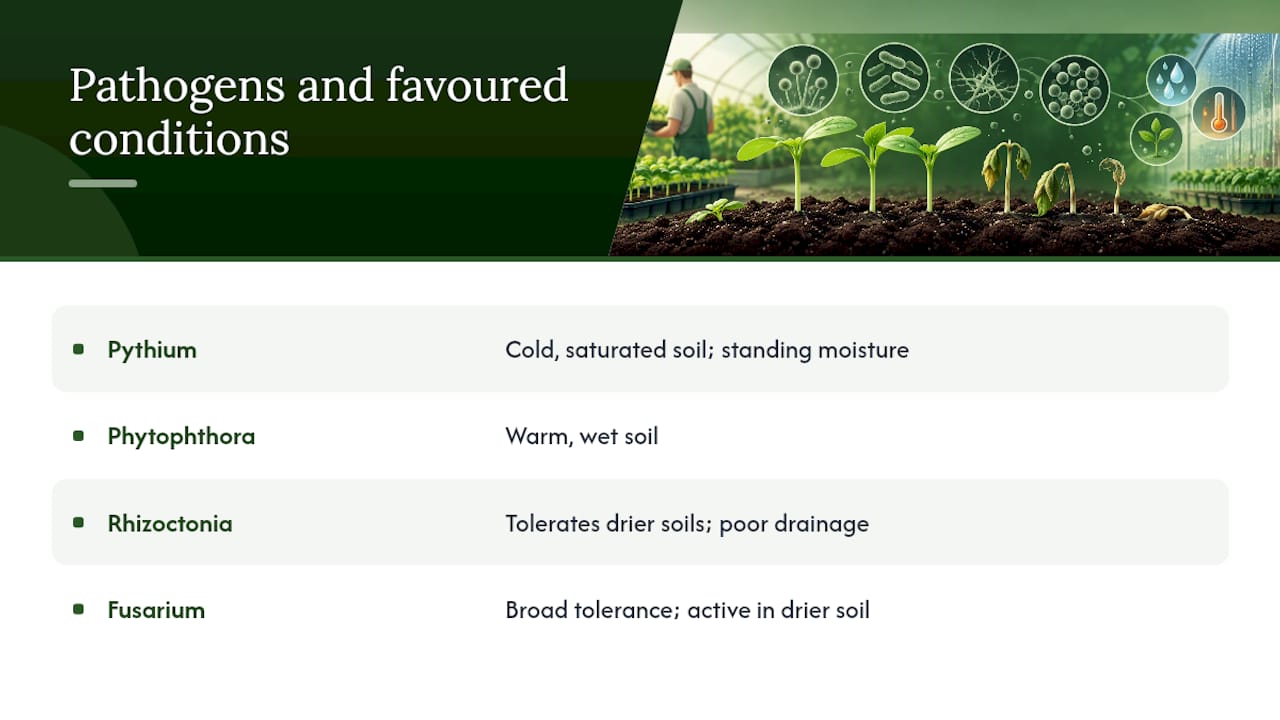
Soil temperature is the biggest lever you control. Cool, wet soil slows germination, and every extra day a seed sits ungerminated is another day the pathogens have to attack it. Excess moisture from overwatering or poor drainage, low light that stresses seedlings, and overcrowded flats with no airflow all stack the odds further. A slow-germinating or leggy seedling is a seedling that’s spent more time exposed, which is exactly why extension guidance keeps circling back to one idea: get seeds up and growing fast.
Preventing and managing damping off: an integrated checklist
Treat this as a sequence, not a menu. Skipping the first two steps and going straight to fungicide is the most common mistake home growers make.
- Start clean. Wash trays and pots in soapy water, then soak in a 10% bleach solution if you’re reusing them. If a container held a previous damping off outbreak, replacing porous plastic pots is often safer than trying to fully disinfect them.
- Use sterile, soilless mix. Skip garden soil and fresh homemade compost for starting seeds. A bagged seed-starting mix, or a pasteurized medium, carries far less fungal inoculum than anything dug from the yard.
- Keep soil warm. A heat mat holding the medium around 70 to 75°F during germination speeds emergence and shortens the vulnerable window dramatically.
- Light immediately after sprouting. Give seedlings 12 to 16 hours of light once they emerge. Weak, stretched, leggy growth from insufficient light is structurally softer and more prone to collapse, so light management doubles as disease prevention.
- Give them room and airflow. Thin crowded flats promptly and run a small fan on low to keep air moving across the leaves. Still, humid air is exactly where fuzzy mould takes hold.
- Water from below or mist lightly. Keep the medium moist, never soggy, and water in the late morning so the surface dries before evening. Avoid cold water below roughly 50°F, which shocks roots and slows growth right when speed matters most.
- Consider treated seed for repeat problems. If a particular spot in the garden or a particular starting setup keeps producing losses, fungicide-treated seed can help. Fungicides only prevent infection. They don’t reverse it once a seedling is already collapsing, so treat them as insurance, not rescue.
- If an outbreak hits, discard and restart. Pull the tray, bag and toss the media, wipe down the workspace, and reseed into a fresh sterile mix. Trying to save the surviving seedlings in the same contaminated tray almost always fails.
Pro Tip: Sow a couple of extra seeds per cell rather than exactly one. If damping off takes half your germinants, you still have a full tray instead of empty cells and a delayed planting schedule.
Publisher proof points: what seed quality has to do with damping off
Good genetics don’t stop fungi, but weak or poorly stored seed germinates slower, and slower germination means more days exposed to soil pathogens. That’s the whole mechanism. The Seed Pharm stocks over 200 strains across autoflowering, feminized, regular, and CBD lines, and backs every order with a 90% germination guarantee, which matters more than it sounds like on paper: fast, even germination is the single biggest lever against damping off short of sterilizing your soil.
Fresh seed, stored cool and dry and handled gently before sowing, pops faster and more uniformly than seed that’s been sitting warm or humid. Pair reliable genetics with the germination steps in this guide and you’ve stacked the two biggest variables in your favour before a seed even touches soil.
Managing damping off in seedlings that already have true leaves
Once a seedling develops its first set of true leaves, it’s mostly past the highest-risk window, but it isn’t bulletproof. A stem that’s already lignifying can still rot if it sits in soggy, cold media for days. If you spot early stem discoloration on an otherwise upright seedling, the first move is backing off water immediately and letting the surface dry before the next watering.
Transplanting is where a lot of growers accidentally reintroduce the problem. Moving a seedling into a bigger pot filled with garden soil or old, reused potting mix undoes every precaution taken at the seed-starting stage. Use fresh sterile mix at transplant time, not just at sowing, and inspect the root ball before it goes in. Roots should be white and branching. Any brown, slimy sections are a sign to trim them away or, if the damage is extensive, to start a new seedling instead.
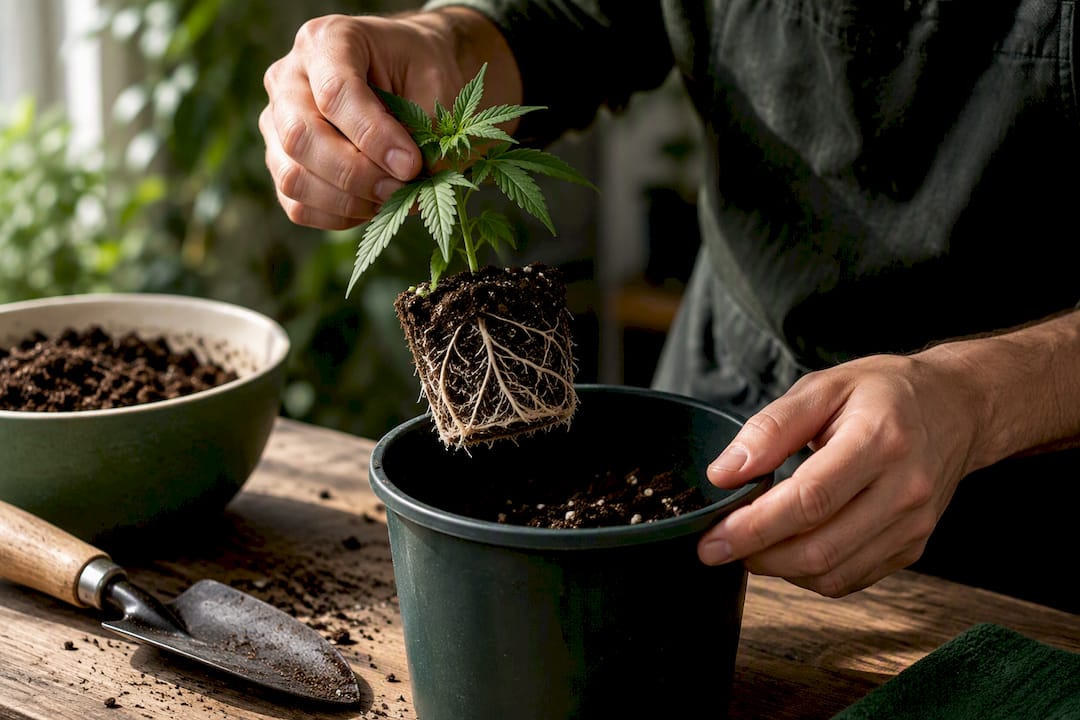
Handle the stem as little as possible during transplanting. Lift by the leaves or the root ball, never by pinching the stem, since bruised tissue is an easy entry point for the same pathogens causing damping off elsewhere in the garden. Water the new pot lightly right after transplant, then hold off until the surface starts to dry rather than keeping it saturated for the first few days. A seedling that’s stressed by transplant shock and sitting in wet soil at the same time is exactly the combination damping off exploits.
If a transplanted seedling does collapse, don’t reuse that pot for the replacement without cleaning it first. The fungus doesn’t disappear when the plant does.
Does damping off affect every crop and seedling the same way?
Not evenly. Fast-germinating, vigorous crops like squash, beans, and many brassicas often outrun the vulnerable window before pathogens get a foothold, provided soil temperature is adequate. Slower germinators, including peppers, many flowering annuals, and cannabis started from seed in cool rooms, spend more days as an exposed seed or fragile sprout, and that extra time is exactly what Pythium and Rhizoctonia need.
Container-grown seedlings tend to see more damping off than direct-sown garden beds, mostly because trays hold moisture longer and airflow is naturally more restricted indoors. Crowded flats compound this: thin, close-set seedlings shade each other, trap humidity, and create a microclimate that favours fungal growth regardless of what species is growing.
Cannabis seedlings carry their own wrinkle. Growers frequently start them in enclosed humidity domes to protect delicate taproots, but that same enclosure raises the risk of fungal growth if it isn’t vented once germination happens. A dome that stays sealed too long turns a helpful humidity boost into a greenhouse for the exact organisms you’re trying to avoid. Venting daily, or removing the dome as soon as the first leaves unfurl, cuts that risk substantially.
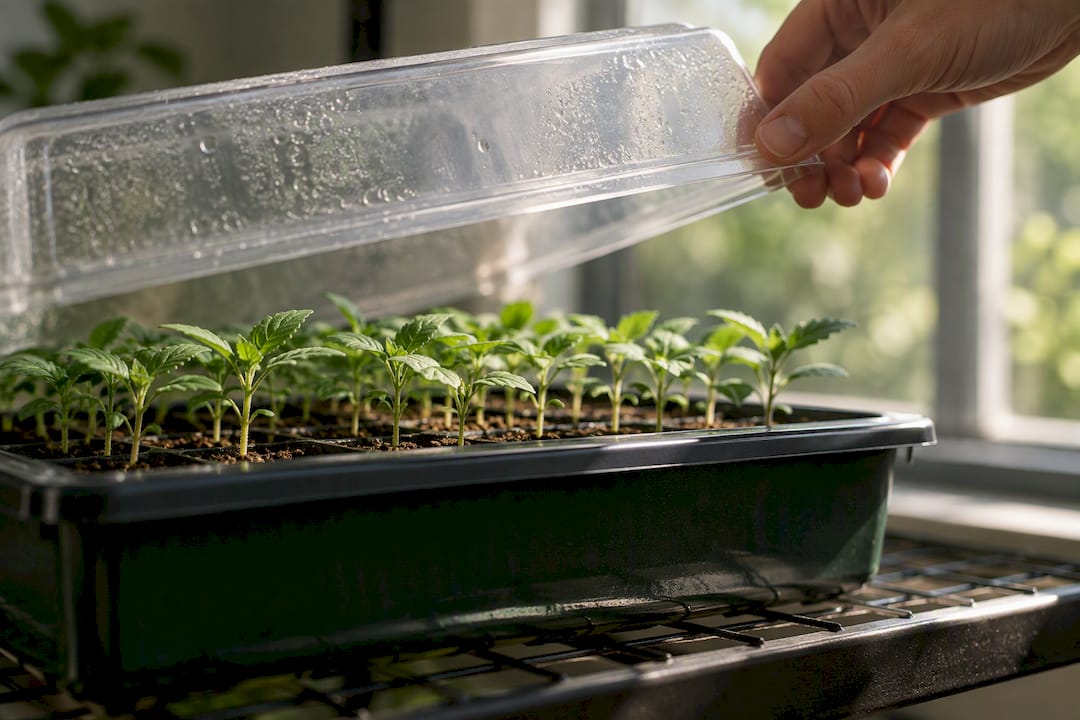
Whatever the crop, the underlying pattern holds. Slow, stressed seedlings in wet, still air lose. Fast, warm, airy conditions win.
Why soil health and rotation matter beyond this season’s seedlings
Damping off pathogens don’t vanish at the end of the season. Pythium and Fusarium in particular can persist in soil and old plant debris for years, which is why a bed or a reused container that had trouble once tends to have trouble again if nothing changes.
Crop rotation helps outdoors, since continuously planting the same or closely related species in the same spot lets soil-borne populations of a given pathogen build up undisturbed. Rotating to unrelated crops, and working finished compost into beds to encourage the broader microbial community that competes with pathogenic fungi, both chip away at the problem over time.
For containers, the equivalent of rotation is simply refusing to reuse old, unsterilized media season after season. Pasteurizing soil at 180°F for 30 minutes eliminates most of the inoculum in garden soil if you want to reuse it, though for most home growers, buying a fresh bagged mix each season is simpler and just as effective. Biological products containing Trichoderma or Bacillus can help suppress these organisms in soil over time, but they work best layered on top of good sanitation and drainage, not as a standalone fix.
None of this is a one-season fix. It’s slow, cumulative work, and skipping it is exactly how the same tray problem shows up again next spring.
A grower’s perspective: three rookie mistakes and fast corrections
Most damping off complaints trace back to the same three habits. Cold soil is the biggest one: growers start seeds on a windowsill or a cool basement floor, then wonder why half the tray never comes up. A heat mat fixes that in a weekend.
Dirty trays are the second. Reusing last year’s cell packs without a real clean, or worse, without replacing them after a known outbreak, seeds the new batch with the exact fungus that killed the last one. And insufficient light rounds it out. Growers underestimate how much light a seedling needs the moment it breaks soil, and the leggy, weak stem that results is far more likely to buckle than a short, sturdy one raised under adequate light for 12 to 16 hours a day.
— The
Where to start if you want fewer losses from day one
Sanitation and warm, well-lit trays fix most damping off problems, but genetics set the ceiling on how fast a seedling clears its vulnerable window in the first place.
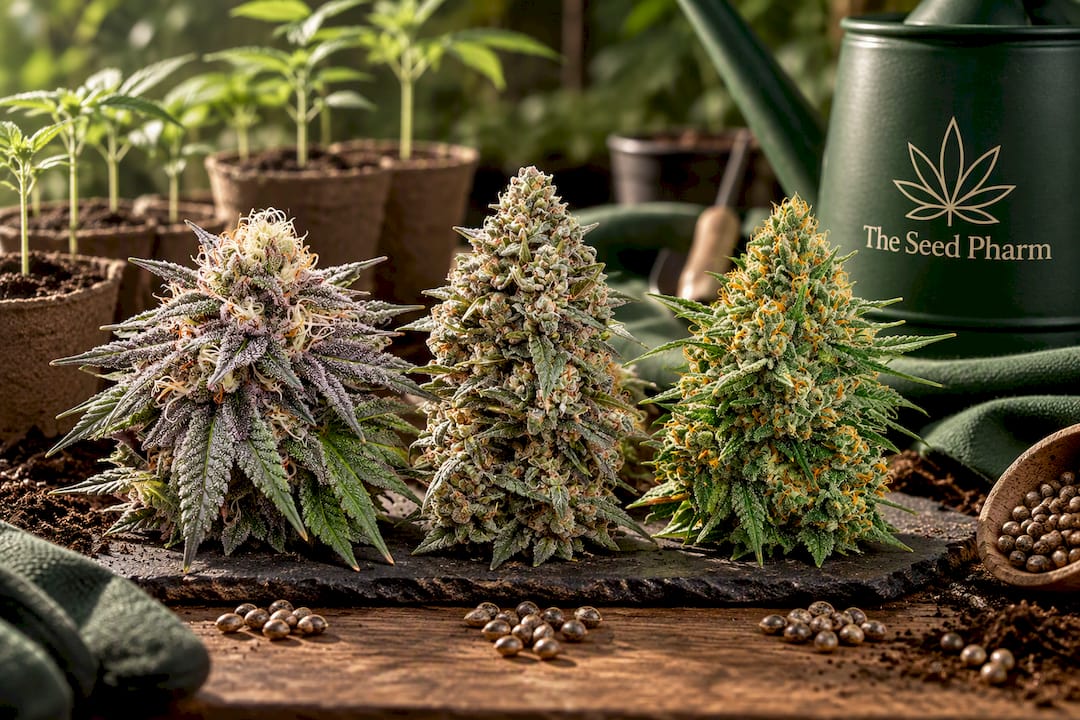
If you’re starting autoflowers, the Star Killer Autoflower Seeds and Death Star Autoflower Seeds are both solid picks for growers who want reliable germination without babysitting temperamental genetics. Looking for CBD options instead? The Alpine Star CBD seeds are worth a look. Good seed is necessary, not sufficient. Pair it with the sanitation, heat, and light steps above, and browse the full seed selection to find genetics that match your setup.
Sources
For lab-confirmed diagnosis, university plant diagnostic clinics accept seedling and soil samples and can identify the specific pathogen involved. Extension resources from UMN, Wisconsin Horticulture, UC IPM, and Penn State Extension cover both diagnosis and prevention in more depth.
- How to prevent seedling damping off | UMN Extension
- Damping Off – Wisconsin Horticulture
- Damping-off diseases in the garden | UC IPM
FAQ
Can a seedling survive damping off?
Rarely. Once the stem is pinched and water-soaked at the soil line, the tissue is already dead and the plant can’t recover. The best move is removing the affected seedling and its surrounding media rather than waiting to see if it bounces back.
Is damping off caused by overwatering?
Overwatering is one of the biggest contributors, but it’s not the whole story. Excess moisture combined with cool soil and poor drainage creates the exact conditions Pythium and Rhizoctonia need, which is why managing soil moisture and temperature together matters more than just cutting back on water alone.
How do I prevent seedlings from damping off?
Start with sterile, soilless mix in clean containers, keep soil around 70 to 75°F during germination, and give seedlings 12 to 16 hours of light once they emerge. Good airflow and watering from below rather than soaking the surface round out the core prevention steps.
How can I control damping off disease once it’s already in my seedlings?
There’s no cure once a seedling has collapsed, so control means stopping the spread rather than saving individual plants. Discard the infected tray and its media, clean the surrounding workspace, and reseed into fresh sterile mix rather than reusing contaminated soil.
Does seed quality actually affect damping off risk?
Yes, indirectly but meaningfully. Fresh, well-stored seed germinates faster and more evenly, shortening the window pathogens have to attack, which is part of why Theseedpharm backs its seeds with a 90% germination guarantee.
Recommended