Cannabis seeds in the USA — home-grow rules by state and how we ship
American cannabis law is fifty different laws. Whether you can legally germinate a seed, how many plants you can keep and whether they can be outdoors depends entirely on your state, and sometimes your county. This page is the plain-English version, state by state, plus what to expect when you order from a Canadian seed bank.
5 statesIllinois, Washington, Hawaii, Oklahoma, South Dakota
No home grow
24 statesIncluding Texas, Florida, Georgia
Typical plant limit
6 per adult12 per household is common
Delivery
5 – 10 business daysPlain packaging
Payment
Card, Cash App, VenmoCards charged in USD
Seeds, federal law and state law
Cannabis seeds themselves contain almost no THC. In January 2022 the U.S. Drug Enforcement Administration confirmed in writing that cannabis seeds, tissue culture and other genetic material with 0.3% delta-9 THC or less meet the federal definition of hemp under the 2018 Farm Bill and are not a controlled substance. That is why seeds are sold and shipped across the country as collectable genetics.
What you may do with a seed is state law. Twenty-one states and Washington, DC allow adults to grow at home; a handful allow only registered medical patients to grow; the rest, including Texas, Florida, Georgia and South Carolina, do not permit cultivation at all. Limits, enclosure rules and public-view rules vary, and cities and counties can add their own. The table below is a summary, not legal advice: check your current state and local rules before you germinate anything. Buyers must be 21 or over.
How we ship to the United States
Orders ship from Canada in plain packaging with nothing on the outside indicating the contents, and typically arrive in 5–10 business days. Shipping is free on orders over $99. Visa and Mastercard are accepted and charged in US dollars; Cash App, Venmo and mailed cash are also available at checkout. If nothing arrives within 30 days we resend once, free.
States where adults can grow at home
Plant limits as of mid-2026. “Mature” means flowering. Most states also require plants to be out of public view and in a locked or enclosed space, and landlords can prohibit growing in a lease.
State
Adult-use home grow limit
Alaska
6 plants per adult, 3 mature; 12 per household
Arizona
6 per adult, 12 per household; must be in an enclosed, locked area
California
6 plants per residence, regardless of how many adults live there
Colorado
6 per adult, 3 mature; 12 per household
Connecticut
3 mature + 3 immature per adult; 12 per household
Maine
3 mature + 12 immature per adult, unlimited seedlings
Maryland
2 plants per household (4 with a medical patient)
Massachusetts
6 per adult, 12 per household
Michigan
12 plants per household
Minnesota
8 plants, 4 mature, at your primary residence
Missouri
6 flowering + 6 non-flowering + 6 clones, with a personal cultivation licence
Montana
2 mature + 2 seedlings per adult; 4 + 4 per household
Nevada
6 per adult, 12 per household, only if you live 25+ miles from a dispensary
New Mexico
6 mature per adult; 12 mature per household
New York
3 mature + 3 immature per adult; 6 + 6 per household
Ohio
6 per adult, 12 per household
Oregon
4 plants per household
Rhode Island
3 mature + 3 immature per residence
Vermont
2 mature + 4 immature per household
Virginia
4 plants per household
Washington, DC
6 per adult, 3 mature; 12 per household
Legal to buy, not to grow. Delaware, New Jersey, Washington State and Illinois have legalised adult use but do not allow recreational home growing. Washington and Illinois allow registered medical patients to grow (up to 6 and 5 plants respectively).
Medical patients only. Hawaii (10 plants), Oklahoma (6 mature + 6 seedlings) and South Dakota (2 flowering + 2 non-flowering) allow home growing for card-holding patients.
No legal cultivation. Everywhere else — including Texas, Florida, Georgia, South Carolina, North Carolina, Tennessee, Pennsylvania, Wisconsin, Indiana, Kentucky, Idaho and Utah — growing cannabis remains illegal even where a medical programme exists. Seeds in those states are collectables, and the growing information on this site is published for regions where cultivation is permitted.
Colorado — Denver, Colorado Springs, Boulder and Fort Collins
Adults 21 and over may grow six plants each, no more than three of them flowering, with a household cap of twelve, in an enclosed, locked space out of public view. Denver adds its own rules on grow-space size and ventilation, so check the city code. The Front Range is a mile high: zone 5b to 6a, last frost around May 10, first frost in the first week of October, ferocious UV, single-digit humidity and afternoon hail from June to August. Plants love the sun and hate the hail — netting or an eave is essential — and mould is almost unheard of. Autoflowers out in late May finish in August; eight-week photoperiod strains out in mid-May are cut at the end of September. Colorado Springs is a touch cooler and shorter than Denver.
Michigan — Detroit, Grand Rapids, Ann Arbor and Lansing
Twelve plants per household, the most generous adult-use limit in the country, kept out of public view in a secured area. Michigan’s climate is humid continental, close to Ontario’s: last frost around May 10, first frost around October 10, hot humid summers and damp September nights that rot dense colas. Choose airy strains or nine-week finishers, plant in late May, and harvest by early October. The Lake Michigan shore runs a week or two later in spring and later into autumn.
California — Fresno, the Central Valley, Los Angeles and the Bay Area
Six plants per private residence, regardless of how many adults live there, in a locked space not visible from a public place; cities may restrict outdoor growing, and some require indoor only. The Central Valley — Fresno, Bakersfield, Sacramento — is zone 9b with a last frost around March 1, a first frost in late November, and forty-degree summer afternoons with very low humidity. It is one of the best outdoor cannabis climates in the world: a photoperiod sativa planted in April will reach three metres and finish in October without ever meeting a frost. Coastal Los Angeles and the Bay Area are milder and foggier, and the same late-finishing sativas can meet coastal fog in October.
Washington State — Seattle, Tacoma and Spokane
Washington legalised adult use in 2012 but never legalised recreational home growing; only registered medical patients may grow, six plants by default and up to fifteen with a health-care authorisation. For those patients, the Puget Sound climate is Vancouver’s: zone 8b, mild and dry through summer, then rain from the last week of September that rots any plant still flowering in October. Spokane and the east are colder, drier and shorter. Seeds are collectables for everyone else.
Washington, DC
Adults 21 and over may grow six plants, three of them mature, with a cap of twelve per household, and possess what they harvest at home. The District is zone 7a to 7b — last frost around April 10, first frost in early November — with hot, sticky summers that call for good airflow. Row-house back gardens and roof decks are the usual grow, kept out of neighbours’ sight.
Illinois — Chicago
Adult use is legal but home growing is reserved for registered medical patients, who may keep five plants. Chicago is zone 5b to 6a, last frost around April 25, first frost around October 25, with lake-effect humidity through summer. Everyone else in Illinois may buy seeds as collectables but not germinate them.
Oklahoma — Tulsa and Oklahoma City
Home growing is for licensed medical patients only: six mature plants and six seedlings. Oklahoma is zone 7a with a long, hot season — last frost in early April, first frost around November 1 — and heavy summer heat. Patients grow fast autoflowers in spring and again in late summer, sidestepping the July heat.
Texas — Houston, Dallas, Austin and San Antonio
Texas does not permit cannabis cultivation, and its medical programme does not include home growing. Seeds are legal to own as collectable genetics under the federal hemp definition, and Texas is one of our larger markets for exactly that reason, but we publish no growing advice for the state.
Florida — Miami, Orlando, Tampa and Jacksonville
Florida runs a large medical programme but does not allow patients or anyone else to grow at home, and the 2024 adult-use ballot measure did not reach the 60% it needed. Seeds are collectables here. If that changes, Florida’s frost-free south would be one of the easiest places in the country to grow outdoors.
Georgia and South Carolina — Atlanta, Charleston, Columbia
Neither state permits cannabis cultivation; Georgia’s low-THC oil programme and South Carolina’s CBD-only law do not include growing. Seeds are collectable genetics only.
Three American favourites, chosen for three different climates
A quick autoflower for anywhere, a West Coast classic for long seasons, and a compact photoperiod for humid summers.
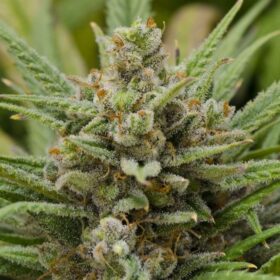
Gorilla Glue Autoflower
The ten-week plant for any legal state
Type: Autoflower, ~63% indica
Seed to harvest: 9–10 weeks
THC: Around 24%
Best for: Colorado, Michigan, the Northeast, small spaces
Flowers on age rather than daylight, so it finishes in August from a late-May start whether you are in Denver or Detroit, and it stays small enough for a locked enclosure.
Is it legal to buy cannabis seeds in the United States?
Cannabis seeds with 0.3% delta-9 THC or less meet the federal definition of hemp, which the DEA confirmed in January 2022, so seeds are sold and shipped as collectable genetics. Whether you may germinate them is decided by your state: 21 states and DC allow adult home growing, five allow only medical patients, and the rest prohibit cultivation.
Which states allow home growing in 2026?
Alaska, Arizona, California, Colorado, Connecticut, Maine, Maryland, Massachusetts, Michigan, Minnesota, Missouri, Montana, Nevada, New Mexico, New York, Ohio, Oregon, Rhode Island, Vermont, Virginia and Washington, DC allow adults to grow. Hawaii, Illinois, Oklahoma, South Dakota and Washington State allow registered medical patients only.
Can I grow cannabis in Texas, Florida or Georgia?
No. None of the three permits cultivation, and Florida’s medical programme does not include home growing. Seeds are legal to own as collectables in all three states.
How long does shipping to the US take?
Typically 5–10 business days from dispatch in Canada, in plain packaging with nothing on the outside indicating the contents. Orders over $99 ship free, and if nothing arrives within 30 days we resend once at no charge.
What payment methods work for US customers?
Visa and Mastercard, charged in US dollars, plus Cash App, Venmo and mailed cash at checkout. Interac e-Transfer is Canada-only.
How many plants can I grow in Colorado, Michigan or California?
Colorado: six per adult with three flowering, twelve per household. Michigan: twelve per household. California: six per residence. All three require plants to be kept out of public view in a locked or enclosed space, and local governments may add rules.
Seeds are sold as collectable genetics. Cultivation is governed by state and local law; the limits above are a summary as of mid-2026, laws change, and nothing here is legal advice. Growing information is published for jurisdictions where cultivation is permitted. Buyers must be 21 or over.
You must be of legal age in your province, state or territory (18+, 19+ or 21+ depending on where you live) to enter this site. Seeds are sold as collectable adult genetics; germinate only where the law allows it.
By entering you agree to our terms and conditions. We remember your answer on this device for 90 days.