Sep
Seed Reviews
Bruce Banner Seeds Canada: Autoflower Grow Guide & Review
Bruce Banner seeds have a reputation problem in the best possible way: growers hear “25% THC” and assume the plant must be temperamental. The autoflowering version is the opposite. It is one of the more forgiving high-potency autos we carry, and for a Canadian grower working with a short outdoor window or a single indoor tent, that combination of heavy resin and low drama is exactly the point. This guide covers the genetics behind the cross, what to expect at harvest, and how to get the most out of Bruce Banner autoflower seeds whether you’re growing in a Vancouver Island greenhouse or a closet in Winnipeg.
Bruce Banner Genetics and Lineage
Bruce Banner takes its name from the sheer output of the original photoperiod line, a cross built around OG Kush and Strawberry Diesel that became known for stacking resin faster than most breeders expected. The autoflowering version folds in ruderalis genetics to trigger flowering by plant age rather than light schedule, and it holds onto more of the parent line’s density than most autoflower conversions manage. The nose stays sweet and floral, almost understated for a strain with this much THC behind it, and CBD sits around 1%, so the effect leans hard toward the psychoactive side without much cannabinoid balance to soften it.
Structurally, expect a hybrid frame with a visible indica influence in the branch spacing and bud density, paired with the head-forward lift that OG genetics are known for. Growers who have run both versions describe the autoflower as slightly more compact but just as resin-heavy, which makes it a reasonable stand-in when a full photoperiod cycle isn’t practical.
Flowering Time, Yield, and What to Expect at Harvest
Because this is an autoflower, bloom starts on its own once the plant reaches a certain age rather than waiting on a 12/12 light switch. Flowering runs up to about ten weeks from seed, and the whole cycle typically wraps in under three months seed-to-harvest. That matters most for outdoor growers: a plant started indoors in late May and moved outside in June finishes well before a prairie or Ontario September frost, with enough runway left over to consider a second round in the same summer.
- Indoor yield: around 500 g under a decent light
- Outdoor yield: up to 900 g per plant with full sun and room to spread
- Flowering time: up to 10 weeks from germination
- THC: approximately 25%, CBD approximately 1%
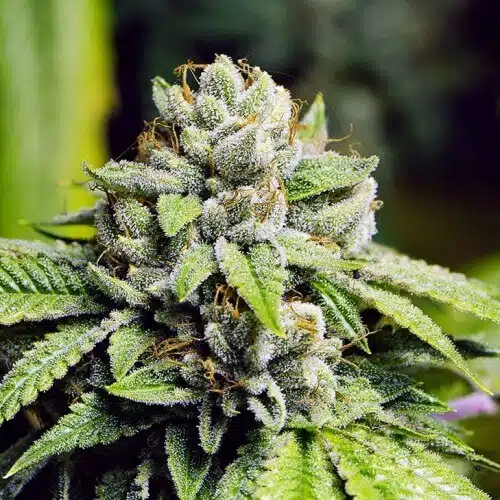
Buds finish tight, heavy, and coated heavily enough in resin that they can be genuinely awkward to break apart by hand — a good problem to have, but worth knowing before you plan your trim session.
Growing Bruce Banner autoflower seeds Indoors
Indoors, the compressed autoflower timeline rewards a grower who gets the basics right early rather than one who intervenes constantly. Pot up to the final container from the start; autos don’t have the weeks needed to recover from a transplant shock the way a photoperiod plant does. Use a light, well-drained medium with plenty of organic matter, and feed conservatively for the first few weeks — this strain punishes overfeeding far more than it punishes a slightly hungry seedling. Early low-stress training in the first two weeks (gently tying down branches rather than topping) spreads the canopy and improves light penetration without costing the plant recovery time it doesn’t have.
Growing Bruce Banner Seeds Outdoors in Canada
Outdoor growers across most of Canada get the real benefit of the autoflower trait here. There’s no need to track sunset times or black out the plants — bloom happens on schedule regardless of daylight. In humid regions like coastal BC or southern Ontario, keep an eye on airflow through the lower canopy once buds start packing on density; those tight, resinous colas are more prone to mold in damp stretches than a looser sativa structure would be. A raised bed or large fabric pot with sharp drainage solves most of the risk. In drier prairie climates, the main job is simply keeping the root zone from drying out completely during the hottest stretch of summer.
Effects and Flavour
Expect a euphoric, talkative head effect backed by a physical ease rather than a knockout. Many growers describe the early stretch of a session as giggly and social, settling into something calmer as it goes on — the indica side of the cross showing up as comfort underneath rather than sedation. The flavour is sweet and floral on the exhale, with none of the diesel funk some OG-leaning strains carry.
Why Choose Bruce Banner Autoflower Seeds
For a Canadian grower who wants a high-potency, resin-heavy plant without committing to a full photoperiod grow cycle, Bruce Banner autoflower seeds hit a sweet spot: forgiving root and feeding requirements, a flowering time short enough to fit inside almost any provincial growing season, and a THC reading that punches well above what the plant’s low-maintenance reputation would suggest. It’s a solid pick for a first autoflower run and still has enough going on — training response, resin production, structure — to reward an experienced grower who wants to push yield.
FAQ
How long do Bruce Banner autoflower seeds take to flower?
Flowering runs up to roughly ten weeks from germination, with the full seed-to-harvest cycle typically finishing in under three months since there’s no vegetative light schedule to manage.
Is Bruce Banner autoflower a good strain for beginners?
Yes. It tolerates a light feeding schedule well and doesn’t require training to produce a solid harvest, though early low-stress training can meaningfully boost yield for growers who want to put in the extra step.
What yield can I expect from Bruce Banner autoflower seeds?
Indoors, plan on roughly 500 g under adequate lighting. Outdoors, with full sun and enough container or bed space, individual plants can reach up to 900 g.
Ready to start your own run? Buy Bruce Banner autoflower seeds at theseedpharm.com and have them shipped discreetly anywhere in Canada.
Ready to Grow?
Shop premium Autoflower Seeds with germination guarantee and free shipping.
Shop Autoflower Seeds →