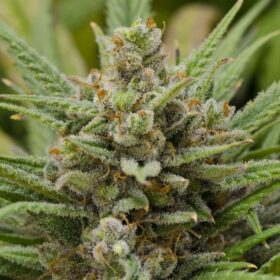
Ontario gives you a real outdoor season, a legal four-plant allowance, and one problem almost every first-year grower underestimates: the plant is still flowering when September turns cool and damp. Everything on this page is written around that.
Home growing in Ontario: the rules in plain English
Under the federal Cannabis Act, adults may grow up to four plants per household — four in total, not four per person — at the place they live. Ontario sets the minimum age at 19, allows growing indoors or outdoors at your own residence, and lets landlords and condominium corporations prohibit growing in a lease or in the building’s rules. Check your lease or condo declaration before you germinate anything.
Seeds count as cannabis for possession purposes: one seed equals one gram of dried cannabis, so the 30-gram public possession limit is 30 seeds. Provincial law expects seeds for growing to come from the Ontario Cannabis Store or an authorised retailer; The Seed Pharm sells seeds as collectable genetics, and you are responsible for knowing and following the law where you live.
How we ship to Ontario
Orders leave our Vancouver operation by Canada Post in plain packaging with nothing on the outside indicating the contents. Ontario delivery typically takes 2–5 business days after dispatch. Shipping is free on orders over $99, Interac e-Transfer is the most popular way to pay in Ontario, and Visa and Mastercard are accepted too. If nothing arrives within 30 days we resend once, free.
Why the two frost dates decide everything
Ontario’s climate is humid continental. Summers are hot and sticky, winters are hard, and the growing season is the gap between the last spring frost and the first autumn one. That gap is about 180 days in Windsor, 160 in Toronto, 140 in Ottawa and barely 110 in Sudbury — which is why a strain that finishes beautifully in Essex County can be caught green and frosted in the Ottawa Valley.
Photoperiod plants flower when the days shorten after the June solstice. In southern Ontario that puts the start of flowering in the first half of August and harvest in late September or October — exactly when nights drop toward 8°C, dew sits on the plants until mid-morning and dense colas start to rot from the inside. Botrytis moves through a bud in about 48 hours once it takes hold.
There are two ways to beat it. Choose photoperiod strains that finish in eight or nine weeks of flower so you are cutting by the first week of October, or run autoflowers, which flower on age rather than daylight and can be started in late May and harvested in August, before the damp arrives at all. Most Ontario growers we talk to end up doing both.
The Ontario growing year
Dates below are for southern Ontario (Toronto, Hamilton, London, Kitchener). Push everything two weeks later for Ottawa and Kingston, and three to four weeks later north of Barrie.
Downtown Toronto sits in zone 7a thanks to Lake Ontario, with the last frost around May 9 and the first around October 15 — roughly 160 frost-free days. The lake delays spring warmth and then holds heat into autumn, so Toronto growers can plant a little later and harvest a little later than growers an hour inland. Summer humidity is high and the late-September dew is heavy, so dense indica colas need to be finished early or kept under cover.
The practical limit in Toronto is not the weather but the building. Most condominium corporations have rules on cultivation, many landlords write it out of the lease, and a plant visible from a neighbouring balcony is the most common reason a grow gets reported. If you are in a condo, a short autoflower in a tent or a closet is the grow that actually happens; if you have a backyard in the east end, Etobicoke or North York, a fence-height photoperiod plant started in late May is entirely realistic.
Mississauga, Brampton, Vaughan and Markham
The suburbs run about a week behind downtown at both ends of the season — last frost around May 12, first frost around October 10 — because they lose the lake’s insulation. What they gain is space: a fenced backyard is the ideal Ontario grow, with full sun from mid-morning, room for a plant to reach two metres, and enough air movement to keep humidity off the buds. Mississauga and Oakville along the lakeshore behave more like Toronto; Brampton, Vaughan and Markham are a touch colder and windier.
Ottawa
Ottawa is a different climate from the rest of southern Ontario: zone 5a, a last frost in mid-May, a first frost right around October 1, and September nights that regularly touch 5°C. The season is about 140 days and it ends abruptly. Photoperiod plants that need ten weeks of flower are a gamble here; eight-week finishers and autoflowers are not. We have a full Ottawa growing guide with the zone 5a calendar and strain picks.
Hamilton, St. Catharines and Niagara
Below the escarpment, Hamilton and the Niagara Peninsula enjoy some of the warmest, longest conditions in the province — the same climate that lets the region grow peaches and wine grapes. Expect the last frost in the first week of May and the first frost in mid-October, with humid summers. Nine-week photoperiod strains finish comfortably; the lakeshore humidity means airy, sativa-leaning bud structure is safer than rock-hard indica colas.
London and the Southwest
London, Sarnia, Chatham and Stratford are zone 6a with a last frost around May 10 and a first frost in the first week of October. Summers are among the most humid in Ontario, which makes mould the main risk in September. Start plants indoors in April, move them out in the third week of May, and favour strains with looser flowers or an early finish.
Kitchener–Waterloo, Cambridge and Guelph
Inland and a little higher, the tri-cities and Guelph are zone 5b–6a: last frost around May 18, first frost around October 1. Plan to have photoperiod plants cut by the last week of September. Autoflowers started at the beginning of June and again at the end of June give two harvests before the cold.
Windsor and Essex County
Windsor is the warmest place in Ontario — zone 7a, last frost in the last days of April, first frost near the end of October, close to 180 frost-free days. It is the one region in the province where a long-flowering sativa like Panama Red or Acapulco Gold can realistically finish outdoors, provided it goes out in mid-May. Humidity is high all summer, so spacing and airflow matter more than anywhere else.
Kingston, Belleville and Eastern Ontario
Lake Ontario moderates Kingston much as it does Toronto: zone 6a, last frost around May 12, first frost around October 10. Inland toward Peterborough and Belleville, subtract a week from each end. Nine-week strains finish; ten-week strains are marginal.
Sudbury, North Bay, Sault Ste. Marie and Thunder Bay
North of the French River the outdoor season is 105–115 days, with frost possible into the first week of June and again by mid-September. Photoperiod plants will not finish outdoors. The northern Ontario grow is an autoflower started indoors in early May, moved out after the June frost, and harvested in late August — or an indoor tent, where the season does not matter at all.
What actually finishes in an Ontario season
Chosen for finishing time and September resilience, not for the biggest THC number.
White Widow Autoflower
The fastest plant in the range — done before September
Type: Autoflower, ~60% indica
Seed to harvest: 7–8 weeks
Height: Short, 60–100 cm
Best for: Balconies, Ottawa and the north
Started outside in late May it is finished by the end of July, weeks before Ontario’s damp nights begin. Short enough to stay below a balcony rail.
Because the outdoor season is short and the winters are long, most Ontario growers run at least one indoor cycle. A 60 × 60 cm tent with a modest LED and one or two plants is enough to use the four-plant allowance well, and indoors the calendar stops mattering: an autoflower finishes in ten weeks whether it is January or July. Ontario’s electricity is time-of-use priced, so many growers run lights overnight on the off-peak rate. Our grow light guide and seedling care guide cover the first weeks.
Frequently asked questions
Is it legal to grow cannabis at home in Ontario?
Yes. Adults 19 and over may grow up to four plants per household at their residence under the federal Cannabis Act. Landlords and condo boards can prohibit it in a lease or building rules, so check yours first. Seeds are sold as collectable genetics; you are responsible for complying with federal and provincial law.
Can I grow on a balcony in Toronto?
Legally you can grow at your residence, but most condominium corporations have rules restricting cultivation and a plant visible to neighbours is the most common cause of complaints. A short autoflower indoors is the realistic condo grow; a balcony plant is only sensible where your building rules allow it and it cannot be seen.
When should I put plants outside in Ontario?
After the last frost: the first week of May in Windsor, around May 9–12 in Toronto, Hamilton and London, mid-May in Kitchener and Ottawa, and the first week of June in Sudbury and Thunder Bay. Start seeds indoors three to four weeks before that date.
Autoflower or photoperiod for Ontario?
Autoflower if you are in Ottawa or anywhere north of Barrie, on a balcony, or starting after mid-June. Photoperiod if you have a sunny yard in southern Ontario and can plant by late May with a strain that finishes in eight or nine weeks of flower. Long-flowering sativas only finish reliably in the Windsor area.
How many seeds can I carry or keep?
For possession limits one seed counts as one gram of dried cannabis, so the 30-gram public possession limit works out to 30 seeds. There is no limit on what you keep at home.
How long does shipping to Ontario take?
Typically 2–5 business days by Canada Post after dispatch, in plain packaging. Orders over $99 ship free, and if nothing arrives within 30 days we resend once at no charge.
Seeds are sold as collectable genetics. Cultivation is regulated by the Cannabis Act and Ontario law; grow only where you are legally permitted to, and check your lease or condominium rules. Frost dates are long-term averages and vary year to year. Buyers must be 19 or over.